
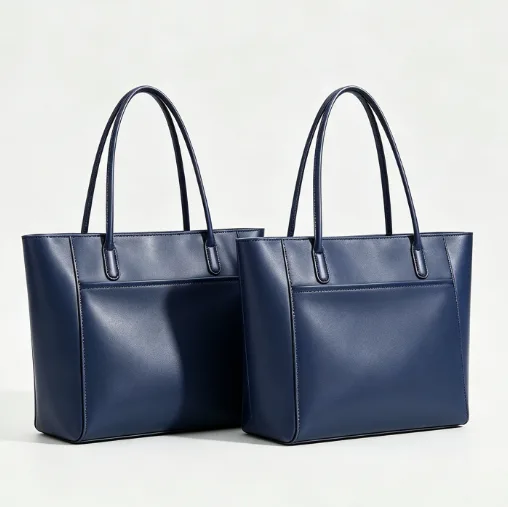
Why Myanmar Is Becoming a Hotspot for OEM & ODM Handbag Manufacturing
The numbers say it all: a factory worker in China earns around $1,100/month. In Vietnam, that drops to $220. In Myanmar, industry estimates put it at $100–$150/month. That makes Myanmar one of the lowest-cost places to manufacture in all of Southeast Asia.
That wage gap is exactly why international bag brands are paying close attention.
The Cost Math Is Hard to Ignore
Chinese manufacturing wages rose 5.1% year-on-year in 2023. Brands producing mid-range handbags and backpacks responded by moving volume orders southward. Vietnam picked up most of that shift first. Now Vietnamese wages are climbing too. Myanmar is the next logical step for cost-focused buyers.
Here’s a real example. A standard PU handbag with a $5.00 FOB price from China can be made in Myanmar for $4.30–$4.50. That’s 10–15% cheaper on labor alone.
EBA Zero-Tariff Access Makes It Even More Compelling for EU Buyers
Myanmar’s cost advantage goes further than labor. Under the EU’s Everything But Arms (EBA) program, qualifying Myanmar-made bags and backpacks enter the EU at 0% tariff. Products shipped from China face 6–12% import duties.
Run the numbers on a real order:
-
China FOB: $5.00 + 10% EU tariff = ~$5.50 landed cost
-
Myanmar FOB: $4.30–$4.50 + 0% EBA tariff = ~$4.30–$4.50 landed cost
That’s an 18–22% total cost reduction per unit. For EU brands selling through price-sensitive retail channels — discount stores, supermarket own labels, DTC e-commerce — that margin difference adds up fast.
What Myanmar Factories Are Best At
Myanmar’s handbag manufacturing industry is still growing. Right now, factories excel at OEM execution — making products to spec from buyer-supplied tech packs. Full ODM design development is less common. The sweet spot for custom bag production in Myanmar includes:
-
600D/900D polyester backpacks (promotional, school, travel)
-
PU and PVC synthetic leather handbags (basic tote and shoulder styles)
-
Canvas tote bags and shopping bags (high-volume, simple construction)
-
Entry-level laptop bags and travel pouches
Complex designs, premium leather goods, or hardware-heavy styles are better sourced from China or Vietnam. Myanmar wins on high-volume, straightforward styles where labor cost drives the price structure.
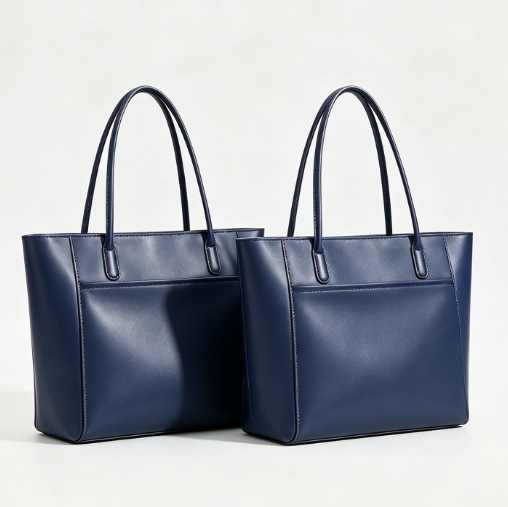
How Smart Buyers Are Using Myanmar in Their Sourcing Mix
Experienced procurement teams are not replacing their existing supply chains with Myanmar. They are adding it as one more sourcing option. The typical approach looks like this:
-
Keep complex or leather-heavy designs in China/Vietnam
-
Send 10,000–100,000 pcs/style basic orders to Myanmar factories
-
Use the labor and tariff savings to protect margins on standard SKUs
Standard OEM MOQs from Myanmar handbag factories run 2,000–5,000 pcs per style. You get better pricing at ≥10,000 pcs. That MOQ range fits well for e-commerce private label programs and mid-size retail buyers trying out a new sourcing channel.
One key point: Myanmar sourcing carries real operational and geopolitical risk. The market rewards experienced importers with a higher risk tolerance. It is not the right fit for first-time buyers building a sourcing operation from scratch.
What to Look for in a Myanmar Custom Handbag Supplier (OEM & ODM)
Picking the wrong factory costs more than money. It costs time, missed seasons, and damaged customer trust. Myanmar’s supplier ecosystem is still maturing. So you need to know what to evaluate before committing to a partner — no shortcuts here.
Six dimensions separate a reliable Myanmar OEM factory from a risky one:
1. OEM vs. ODM Capability — Know Which You Need
These two models serve very different buyer profiles.
OEM works best for established brands with their own design team and tech packs. The factory executes your spec. What matters is production consistency and sample fidelity — dimensions within ±0.5 cm, batch-to-batch color variance invisible to the naked eye.
ODM suits startups, cross-border sellers, and buyers with limited design resources. A capable ODM factory keeps a library of 10–30 ready-to-adapt styles per category (totes, crossbodies, camera bags). It can also launch 5–20 new seasonal designs each year.
A quick rule of thumb for Myanmar sourcing:
– Under 5,000 pcs/year → prioritize ODM capability to cut development cost
– 5,000–20,000 pcs/year → a hybrid model works: OEM for bestsellers, ODM for new market tests
– Over 20,000 pcs/year → focus on OEM factories with proven high-volume consistency
2. MOQ Structure and Sample Support
MOQ benchmarks to expect for custom handbag manufacturing:
– PU / canvas bags: 100–300 pcs per style, per color
– Genuine leather bags: 50–150 pcs per style, per color
Push for a three-tier structure from any Myanmar supplier you’re evaluating:
|
Stage |
Quantity |
Purpose |
|---|---|---|
|
Sampling |
1–3 pcs/style |
Design validation |
|
Trial order |
80–150 pcs/style |
Process and lead time check |
|
Production run |
≥300 pcs/style |
Full OEM execution |
Also confirm two things. First, does the factory accept split-color orders (e.g., 300 pcs across 3 colorways at 100 pcs each)? Second, do they handle multi-style small batches (e.g., 4 styles × 100 pcs = 400 pcs total per run)?
Sample fees run $50–$120/style for PU bags and $80–$200/style for leather. Plan to pay 1.5–3× the target unit cost. A solid factory delivers a first proto in 7–15 days and completes comment sample + PP sample rounds before mass production starts.
3. Lead Time — and the Myanmar Supply Chain Reality
Standard OEM lead time from a mature Chinese factory: 30–45 days after sample approval. Myanmar factories run 10–20 days longer. The reason is simple — key materials like hardware, PU, and specialty linings often get imported from China or Thailand.
Get a quote? Ask for the full breakdown:
– Material sourcing: 15–30 days (longer for imports)
– Production: 25–35 days
– Pre-shipment inspection + packing: 7–10 days
A strong Myanmar partner can compress lead time with rush-order arrangements — a 5–10% premium can shorten the timeline from 60 to 45 days. Ask for their on-time delivery rate over the past 12 months. Target ≥ 95%.
4. Quality Systems and Certifications
Myanmar factories are not all at the same level. Here’s the baseline to require:
-
Quality control: An independent QC team (minimum 3–5 inspectors per 500–1,000 workers), with documented incoming material inspection, in-process checks, and final AQL inspection at AQL 2.5 / 4.0
-
Defect benchmarks: Incoming material rejection rate < 3%, in-process defect rate < 5%, customer return rate < 2%
-
Third-party audit readiness: BSCI, SEDEX, or SMETA compliance; must accept SGS / Intertek / Bureau Veritas inspections with a pass rate ≥ 95%
Ask for third-party material test records covering colorfastness, abrasion resistance, and hardware corrosion. These carry the most weight for EU and US retail compliance.
5. Communication Responsiveness
This one gets overlooked — and it shouldn’t. Slow responses in a sourcing relationship pile up fast. The result is missed deadlines.
Hold Myanmar suppliers to these minimum standards:
– Full quote turnaround (unit price + specs + lead time): within 24–72 hours
– Sample revision feedback: within 24–48 hours
– Problem resolution cycle (issue identified → solution executed): under 3 business days
Ask for a dedicated project manager who covers the full cycle from sampling through delivery. They should send production updates in writing every week. Use WhatsApp or WeChat for real-time communication, and email for formal records.
Not every Myanmar factory you contact will meet all six criteria. But these benchmarks give you a clear filter — and a straight picture of what working with a Myanmar custom handbag supplier takes.
1. Orient Myanmar Bag Factory — Multi-Country OEM Network for Backpacks & Travel Bags
Orient Bag Factory started in 1983. That’s over four decades of OEM experience. Most Myanmar-listed suppliers run a single factory. Orient runs a three-country direct factory group — China, Cambodia, and Myanmar.
That multi-plant structure sets it apart from almost every other supplier on this list.
Combined scale: ~1,000 employees, ~46,000 m² of production space across all three sites. The product focus is backpacks, travel duffel bags, school bags, and laptop bags. These are high-volume, labor-intensive categories. Myanmar’s cost structure delivers real savings here.
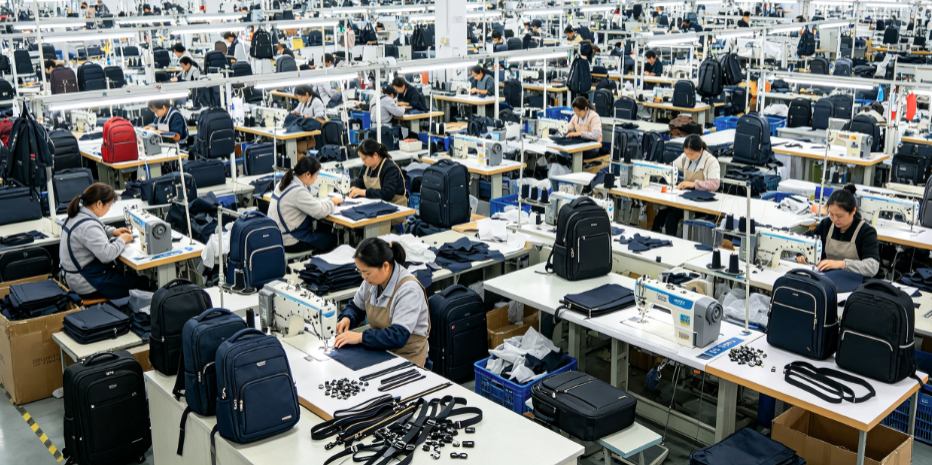
How the Three-Country Model Works for Buyers
Each facility handles a specific role:
-
China → sampling, complex styles, short-run development orders
-
Cambodia → mid-to-large volume runs with EU tariff advantages
-
Myanmar → high-volume, cost-sensitive production with US tariff benefits
Got an order over 100,000 pcs with a tight deadline? Orient splits production across all three sites at once. That cuts lead time by 20–30% compared to running everything through one factory.
Key Numbers for Procurement Planning
|
Dimension |
Range |
|---|---|
|
Myanmar estimated output per month |
150,000–300,000 pcs (backpacks/travel bags) |
|
OEM sampling lead time |
7–10 days (first proto) |
|
Full production lead time |
45–75 days depending on volume and origin |
|
MOQ (Myanmar/Cambodia) |
1,000–2,000 pcs/color/style; ≥3,000 pcs recommended |
Best fit: Brand buyers placing ≥10,000 pcs per style, sourcing for US or EU retail channels, who need flexible capacity across peak seasons without single-factory risk.
2. Soki Bag — PU Handbag OEM Specialist With Myanmar-Cambodia-China Capacity
“One Partner. Three Countries. Smart Sourcing.” — that’s SOKI Bag’s model in six words.
SOKI Bag & Accessories runs a tri-country production network: China (Guangzhou Shiling + Yiwu), Cambodia (Kampong Speu Province), and Myanmar (East Dagon Industrial Zone, Yangon). Unlike general bag factories, Soki stays focused on one product area: high-quality PU handbags, wallets, small leather goods, and fashion accessories. That focus makes a real difference for mid-range PU sourcing. Material quality and design execution shape how buyers see your brand — and Soki builds around both.
How the Three-Country Model Works
Each location has a clear role:
-
China → Design development, sampling, material sourcing (Shiling ranks among China’s largest leather hardware hubs)
-
Cambodia + Myanmar → High-volume production with strong tariff positioning for US and EU buyers
Here’s the practical side: your first sample gets built in China, drawing on Guangzhou’s deep PU and hardware supply network. Repeat production shifts to Cambodia or Myanmar. You cut labor costs and gain better tariff treatment — in one move.
Why This Setup Works for PU Handbag Brands
Soki’s Myanmar factory produces thousands of cooler bags and fashion PU bags each year for international brands. The China development side keeps material quality sharp — PU in 0.8–1.4mm thickness, Saffiano, cross-grain, litchi textures, custom hardware in brushed gold/gunmetal/silver finishes, and PANTONE color-matched linings.
Best fit: Mid-tier fashion brands sourcing PU totes, crossbodies, wallets, or cosmetic bags. You get China’s design development speed plus Southeast Asia’s cost and tariff advantages — all managed through one account team.
3. J.D. Handbag Factory — 20+ Years OEM/ODM Experience Serving Global Brands
Two decades of OEM work leaves a paper trail — and J.D. Handbag Factory has it.
The group runs under three brand names: J.D. Handbag Factory, J.D. Leather Goods, and J.D. Backpack Factory. Production spans Dongguan, Sichuan, and Cambodia. Each site has a clear job. Dongguan handles complex development and engineering samples. Sichuan covers mid-tier and bulk production. Cambodia serves as the Southeast Asia hub for EU/US tariff-friendly orders.
That structure is worth noting for Myanmar-focused buyers. J.D.’s “design in China, manufacture in Southeast Asia” model maps directly to Myanmar sourcing. Plus, their Dongguan tech standards give you a ready-made audit benchmark for checking new Myanmar factories.
Why Mid-to-High-End Brands Use J.D. as a Quality Reference
J.D. works with brands in the USD 80–300 retail price range. Typical orders run 500–3,000 pcs/style. Full Tech Pack support comes standard. That includes front/back/side views, internal structure cross-sections, BOM with material specs (thickness in mm, g/m², tear strength), Pantone-matched color tables, and AQL inspection criteria (2.5 for aesthetics, 0.65 for function).
Evaluating Myanmar factories? J.D.’s documented craft standards give you a solid comparison baseline:
-
Stitch density: 3–4 mm standard; tighter at load-bearing points with back-stitch reinforcement
-
Edge paint: consistent thickness, no bubbling or cracking, 50-bend test without peeling
-
Hardware pull strength: ≥ 150–200 N on key clasps; salt spray test (24–48 hrs) with no visible rust
Best fit: Brands with a clear design direction that need full engineering documentation — and want a benchmark system they can carry across multiple production countries, Myanmar included.
4. Orient Group School & Promotional Bag OEM Network — Myanmar Node for Volume Orders
120,000 promotional bags per month. That one number from Orient Group’s China factory tells you what kind of manufacturer this is — built for volume, not one-off runs.
Orient Group runs production across China, Cambodia, and Myanmar. The main product focus sits on school bags, promotional backpacks, and bulk travel-style bags. These are high-repeat, labor-heavy categories where Myanmar’s lower cost structure makes the biggest difference.
How the Myanmar Node Fits Into Order Allocation
The Myanmar facility isn’t a standalone operation. It works as a cost-down and capacity-buffer node inside the group’s three-country network:
-
Peak season demand (school procurement cycles, corporate promo campaigns) spreads across all sites to protect lead times
-
Price-sensitive SKUs go to Myanmar, where labor savings are the strongest
-
Complex or development orders stay in China
Best-Fit Buyers
This setup works best for:
-
School bag wholesalers needing seasonal restocking at scale
-
Promotional gift suppliers sourcing logo bags for events or corporate campaigns
-
E-commerce sellers building private label backpack programs
Practical MOQ target for Myanmar volume orders: 500–3,000 pcs per SKU is where real cost savings start to show. Before you commit, check monthly capacity by style, logo application options (screen print, heat transfer, embroidery), and material compliance docs (REACH for EU-bound shipments).
5. Myanmar Wholesale Tote Bag Supplier (Alibaba Platform) — Low MOQ Entry Point for Custom Tote Bags
Alibaba is where most small-volume tote bag buyers start — and for good reason. Search “canvas tote bag custom logo low MOQ” and you’ll find suppliers accepting orders from 100–300 pcs per style. Some go as low as 1–50 pcs for sampling runs.
FOB unit pricing for standard cotton or recycled cotton tote bags falls at:
-
Blank 8–10oz canvas tote: $0.45–$0.80/pc (300 pcs MOQ)
-
With screen-printed logo (1–4 colors): $0.70–$1.50/pc
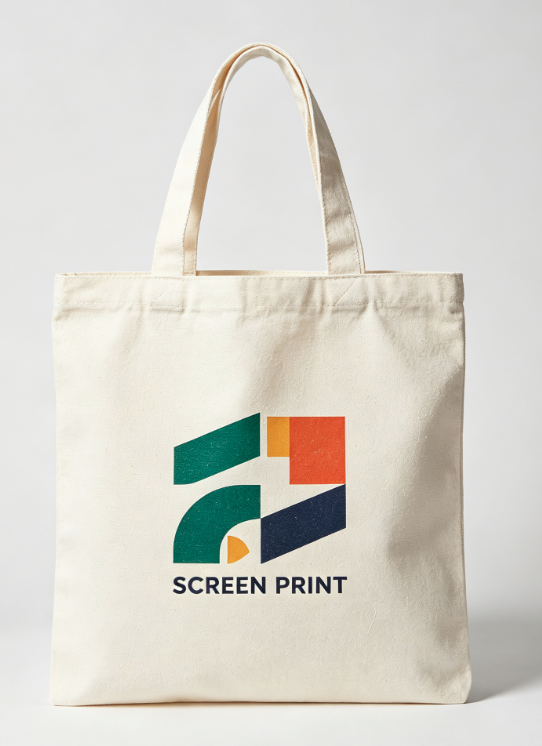
Sampling takes 5–10 days. Mass production ships in 15–30 days from deposit payment.
What OEM Customization Actually Covers
Most platform suppliers handle the basics well:
-
Logo printing: screen print, heat transfer, digital print — budget +$0.05–$0.20/pc per color
-
Fabric color: standard off-white is cheapest; custom dyed colors add about $0.05–$0.10/pc
-
Minor structural tweaks: handle length, added zipper, interior pocket count — these stay within OEM pricing without pushing MOQ much higher
True ODM structural design is a different story. Think new bag silhouettes, laptop compartments, and magnetic closures. Factories require 500–1,000 pcs minimum for that level of work. You also pay pattern fees of $50–$200 on top of that.
Platform Buying vs. Direct Factory — Quick Comparison
|
Factor |
Alibaba Platform |
Direct Factory |
|---|---|---|
|
MOQ |
100–300 pcs |
Often 500+ pcs |
|
Unit price |
~5–15% higher |
Lower at volume |
|
Payment protection |
Trade Assurance |
Negotiated terms |
|
Transparency |
Variable (some are traders) |
Higher |
Best fit: Independent e-commerce sellers and early-stage brands testing tote bag styles at 50–300 pcs. Filter by Trade Assurance + Verified Supplier badges to cut risk. Before approving mass production, request a physical sample. Get written confirmation covering fabric weight, print placement dimensions, and stitch margins. This step protects you from costly surprises down the line.
6. Xinzirain & B.S. Bag Factory — China OEM Benchmarks for Evaluating Myanmar Leather Handbag Suppliers
No reference point means guesswork. Xinzirain and B.S. Bag Factory — both established China OEM operations — give you that reference point.
These aren’t Myanmar factories. They’re Chinese OEM benchmarks built to help you audit what a capable leather bag manufacturer looks like. Check these standards first. Then commit to a Myanmar partner.
The Xinzirain Standard: What “Good” OEM Service Looks Like
Xinzirain runs on measurable checkpoints:
-
Design input flexibility: accepts hand sketches, reference photos, tech packs, or catalog selections — no complete spec package needed to start sampling
-
24-hour response SLA: initial feasibility assessment, material suggestions, and price range — all within one business day
-
Sampling cycle: first proto in 7–15 days, with at least 1–2 rounds of free structural revision
-
Sample cost reference: ~$50–120/style for standard leather bags
-
Full BOM transparency: itemized material quantities, unit costs, and waste rates — all shared before mass production starts
Production lead time for 300–1,500 pcs runs 30–45 days from deposit and sample sign-off. Final inspection follows AQL 2.5. The finished-goods defect rate stays under 1–2%.
B.S. Bag Factory: Craft Quality Benchmarks
B.S. Bag Factory sets the quality floor for mid-to-premium leather goods OEM:
-
Dimensional accuracy: ≤2–3mm versus reference sample
-
Stitch consistency: line spacing variance ≤0.5mm, corner stress points hold through ≥200 bend cycles
-
Hardware plating: passes 24–48 hour neutral salt spray with no visible discoloration
-
Small-batch capability: full development and production from 50–100 pcs/style
How to Use These Benchmarks Against Myanmar Factories
Use both standards as a scoring checklist. Run it across four dimensions:
|
Dimension |
China OEM Baseline |
Flag if Myanmar Factory… |
|---|---|---|
|
Response time |
≤24 hours |
Takes >72 hours for first reply |
|
First sample |
7–15 days |
Exceeds 25 days |
|
Defect rate |
<1–2% |
Won’t share QC data |
|
On-time delivery |
≥95% |
Can’t provide last-12-month record |
Weight the four dimensions: service system (30%) / sampling capability (25%) / craft quality (25%) / delivery reliability (20%). Score each with real numbers — hours, days, percentages. Skip gut impressions.
Many Myanmar leather factories at this stage lack experienced pattern-makers, edge-painting equipment, and systematic AQL records. That gap is real. It’s also manageable. Walk in with a solid audit framework. Xinzirain’s process gives you that template — ready to use.
7. HerminFashion Southeast Asia Custom Purse Network — Mapping Myanmar in the Regional OEM Landscape
Myanmar doesn’t stand alone in Asia’s OEM landscape. It fits into a layered regional structure. HerminFashion’s Southeast Asia sourcing framework makes that structure easy to see.
HerminFashion runs out of a Guangzhou base, focused on OEM/ODM women’s bags, purses, and accessories in PU, polyester, and canvas. Their regional breakdown of Southeast Asian custom purse factories places the whole region — Vietnam, Cambodia, Myanmar, Indonesia, Thailand — as a tiered cost layer below China. These countries take on overflow orders for basic and mid-range styles.
So where does Myanmar fit in that tier? Industry export data puts Myanmar at 5–10% of Southeast Asia’s total soft-goods OEM output — behind Vietnam, and close to Cambodia in scale. Its clear strength is in promotional totes, basic polyester backpacks, simple PU wallets, and canvas shopping bags — all hitting FOB targets of $1–8/pc.
Myanmar’s Role in a Multi-Country Sourcing Split
HerminFashion’s regional model gives brands running 300,000–1,000,000 pcs/year a clear way to split production:
|
Production Node |
Best-Fit Products |
Suggested Volume Share |
|---|---|---|
|
China (Guangzhou) |
Development, sampling, complex/leather styles |
30–50% |
|
Vietnam |
Mid-price structured styles, brand mainline |
20–40% |
|
Cambodia + Myanmar |
Basic, promotional, bulk replenishment styles |
20–50% combined |
Within the Cambodia + Myanmar block, start Myanmar at 5–15% in year one. Keep that allocation on backpacks, totes, and simple wallets. Once defect and return rates drop below 3–5%, you can grow Myanmar’s share by up to 5 percentage points per year. A safe ceiling sits at 25–30% — enough to keep policy and logistics risk in check.
Best fit: Brands building a multi-country sourcing mix who need a clear framework for deciding which SKUs go to Myanmar — and in what volume.
8. YC Making / Global OEM Reference — What Top Handbag Brands Expect From Suppliers
Global brands don’t guess when they audit a factory. They score it.
YC Making’s framework for ranking top handbag manufacturers shows what separates a credible OEM partner from one that only looks good on paper. These benchmarks matter whether you’re auditing a factory in Guangzhou or Yangon. Know them before you sign anything.
The KPIs That Get Measured
Top brands run suppliers against hard numbers, not impressions:
-
Defect rate: AQL 2.5–4.0 at shipment; luxury brands target < 0.5–1.0% per batch
-
On-time delivery (OTD): ≥ 95% for mid-tier brands; 98–99% for luxury first-batch launches
-
Sampling speed: first proto in 7–10 days for standard PU or leather styles; total development ≤ 30 days
-
Dimensional accuracy: mass production within ±2mm of gold sample; color variance ΔE ≤ 1.0–1.5
-
Customer return rate: structural defect returns < 0.3–0.5%; zero annual recall-level incidents
Where Most Myanmar Factories Stand Right Now
Fewer than 30–40% of Myanmar handbag factories hold ISO 9001, BSCI, or SEDEX certification. Compare that to 70–80%+ in China’s coastal manufacturing zones. Advanced leatherwork, IP hardware controls, and English-speaking project managers are also hard to find.
The gap is real. It’s also closeable.
Here’s what it takes. A factory needs to prioritize certification. It should build one benchmark production line targeting < 1.5% in-process defect rate. Plus, it needs basic IP controls in place — restricted sample rooms and server-based file permissions. Do those three things, and the gap closes within 12–18 months.
For buyers: use these KPIs as a direct scoring checklist — not a wishlist.
Myanmar OEM & ODM Handbag Sourcing Guide: How to Start Your First Order
First orders with a new Myanmar factory fail for one reason more than any other: buyers skip steps. Here’s the five-stage process that keeps your first custom bag order on track.
Step 1: Send a Complete Inquiry
Your inquiry needs to cover the basics. Include your target FOB price range (USD/pc), estimated order quantity, primary material (PU/genuine leather/canvas), dimensions (L×H×W in cm), target delivery date, and destination port.
Attach at least one Tech Pack covering:
– Dimension sheet with tolerances (±0.3–0.5 cm)
– Construction drawings and hardware list (zipper brand, plating color)
– Stitch requirements (e.g., 8–10 stitches per inch)
The quote you get back will break down like this:
– Materials: 50–70%
– Labor: 15–25%
– Overhead: 5–10%
– Profit margin: 10–20% (negotiable to 10–15% on orders over 3,000 pcs)
MOQ reference for Myanmar factories:
– PU/synthetic leather bags: 300–800 pcs/style; trial orders can go as low as 150–300 pcs
– Genuine leather bags: 100–300 pcs/style
– ODM ready-made styles: often 100–200 pcs minimum
Step 2: Confirm Samples the Right Way
Two samples matter here — and they serve different purposes.
A development sample can use substitute materials. It checks structure and appearance. A PP sample (Pre-Production Sample) must use the exact production fabrics, linings, zippers, and hardware. It becomes your final acceptance benchmark. Never approve bulk production without a signed-off PP sample.
Sampling costs to expect:
– PU/canvas styles: ~USD 30–80/style
– Leather styles: ~USD 60–150/style (partial refund against bulk order is negotiable)
– Revision rounds: first version charged in full; rounds 2–3 cover labor and shipping costs
Before bulk cutting starts, request swatches of all production materials — fabric, lining, zipper, hardware — and sign off on them in writing. That paper trail is your main quality and claims evidence if problems come up later.
Step 3: Audit the Factory
You don’t need to travel to Yangon for a first audit. A structured remote review covers the essentials:
-
Line capacity per day (standard PU handbag lines produce 300–1,000 pcs/day; check Myanmar figures straight from the factory — management quality varies)
-
QC system: incoming inspection, in-process checks, final AQL audit (standard: AQL 2.5/4.0 — zero critical defects, ≤2.5% major, ≤4.0% minor)
-
International buyer track record: EU/US/Japan orders, BSCI or SEDEX audit history
At minimum, run a video walkthrough of the production floor before you commit. Budget allowing, bring in a third-party assessor to cover line layout, safety, and storage conditions.
Step 4: Lock Down the Contract
Four clauses to get right before signing anything:
-
Pricing: List material, labor, packaging, and freight as separate line items. Add a renegotiation trigger if the primary fabric market price shifts more than 5–10%.
-
Lead time: The clock starts from written PP sample approval + deposit receipt. Typical Myanmar first-order lead time runs 45–75 days.
-
Quality: PP sample + signed material swatches = final acceptance standard. Define the AQL level and spell out how defects get handled (rework / discount / return).
-
IP protection: The factory may not show, sell, or exhibit your style to third parties. Set the penalty at X× order value for any violation. Send watermarked CAD files — never editable originals.
Payment terms for first orders: 30% deposit + 70% against copy of Bill of Lading is standard. First-time buyers can negotiate 40/60 to reduce factory risk. Use bank wire (T/T) for B2B orders — PayPal and Western Union work for small samples but carry higher fees.
Step 5: Manage Bulk Production in Four QC Nodes
Don’t wait until shipment to check quality. Build four inspection checkpoints into every order:
|
Node |
Timing |
What to Check |
|---|---|---|
|
Node 1 |
Materials arrive at factory |
Fabric color variance, weight, coating adhesion; hardware salt spray or abrasion test |
|
Node 2 |
PP sample sign-off |
Full production materials confirmed; structure, dimensions, hardware placement, logo process approved before cutting |
|
Node 3 |
Mid-production |
Stitch density, seam alignment, strap reinforcement per spec drawing |
|
Node 4 |
Pre-shipment |
AQL functional check: zipper 10-cycle test, handle load test (8–10 kg static load, no seam failure), hardware open/close cycles; packaging completeness and export label compliance |
Start Small, Then Scale
The lowest-risk path in Myanmar handbag sourcing isn’t a large first order — it’s a staged one.
Phase 1 — Pilot order: 100–200 pcs for ODM styles; 150–300 pcs for custom OEM styles across 2–3 colorways. The unit price will run a bit higher — that’s expected. Treat this order as a quality and reliability test, not a profit run.
Phase 2 — Validate: Collect 30–100 units of real customer feedback. Put handles and hardware under stress. Log every defect by type and severity. Send the full issue list to the factory in writing before placing the next order.
Phase 3 — Scale: Total defect rate below 3–5%? Critical functional defects under 1%? Go ahead and expand to 500–1,000 pcs on the next run. That’s also the right time to renegotiate unit price at that volume.
This staircase approach protects your budget, builds factory accountability, and gives you real data before Myanmar takes up a major share of your sourcing mix.
FAQ: Custom Handbag OEM & ODM in Myanmar
Buyers ask the same questions before every first Myanmar order. Here are direct answers.
What is the MOQ for custom handbags made in Myanmar?
50–100 pcs/style for PU bags. 80–150 pcs/style for genuine leather. Complex hardware-heavy styles may push that to 200 pcs.
Do Myanmar factories support genuine leather or only PU?
Both. Most factories handle PU, synthetic leather, canvas, and genuine leather (cowhide, lambskin). Ask them straight: can their Myanmar line sew structured bags with metal frames or reinforced bases? Get that answer before you commit.
What lead times should I plan for?
Sampling: 20–25 working days. Bulk production: 30–45 days after PP sample sign-off. For first orders, budget 60–90 days total — development through delivery.
Do Myanmar factories hold BSCI or ISO 9001 certification?
Multi-country OEM groups in Myanmar tend to carry BSCI or ISO 9001. That said, always request the certificate scan. Check the certificate number on the issuing body’s website. Make sure the certificate lists the Myanmar facility address — not just the China headquarters.
How does Myanmar’s political situation affect delivery?
Add 15–20 extra days to Myanmar production timelines. Keep 1–2 months of safety stock in your destination market. Split orders across China, Cambodia, and Myanmar. This reduces single-country risk.
What if there’s a language barrier?
Send spec sheets with diagrams. Use standard metric units. Communicate via WhatsApp with photo and video references — it cuts through a lot of confusion fast. Many Chinese-owned Myanmar factories have bilingual staff on hand. For complex structured styles, a sourcing agent based in China or Hong Kong is worth bringing in.