Top 10 Custom Handbag Manufacturers In Bangladesh
These manufacturers are worth your attention. Each one was picked based on production capability, certifications, MOQ flexibility, and export track record.
1. SiATEX Bangladesh (Dhaka)
Best for: Cotton, canvas, jute, and non-woven tote bags with custom print
SiATEX is a Dhaka-based exporter with a strong track record. They serve buyers in the EU, USA, and Middle East. You get a wide range of customization — PMS color matching, screen print, digital print, and embroidery. Print areas go up to A3 (29.7×42 cm) on bag panels.
-
MOQ: 500–1,000 pcs per design
-
Lead time: 30–60 days for 1,000–10,000 pcs after sample approval
-
Certifications: ISO 9001, BSCI/SEDEX audits
2. Pritomtex Ltd.
Best for: High-quality canvas tote bags for retail and promotional use
Pritomtex uses 8–16 oz cotton canvas (240–380 g/m²). That makes them a solid choice for sturdy retail totes and simple shoulder bags. Standard logo print width runs 20–25 cm on the front panel.
-
MOQ: 300–500 pcs (promotional totes); 800+ pcs (multi-color fashion bags)
-
Print options: 1–4 color logo prints
3. Fashionista Textiles Ltd.
Best for: Trendy women’s fashion handbags and printed totes
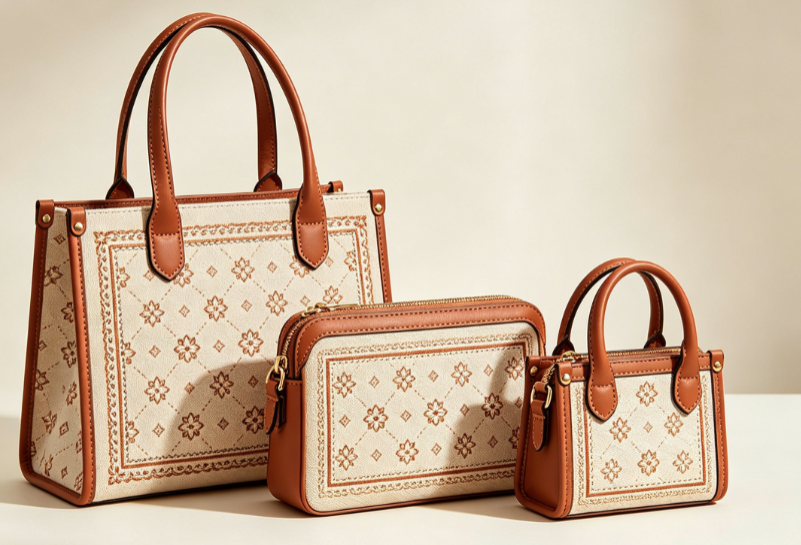
Your brand targets fashion-forward consumers? Fashionista Textiles covers that well. They produce printed totes, zipper shoulder bags, and mini handbags. Materials include cotton canvas, PU leather, and polyester blends.
-
FOB price benchmark: US$2.50–5.00 per fashion tote at 1,000 pcs
-
Style range: Printed totes, zipper bags, mini handbags
4. Green Earth Bags Ltd.
Best for: Eco-branded handbags — jute, organic cotton, biodegradable materials
Green Earth Bags is a strong pick for sustainable brands. Their jute bags are 100% biodegradable — composting time runs 6–24 months under industrial conditions. They also work with PLA-blended non-woven and GOTS-certified organic cotton.
-
Certifications: OEKO-TEX, GOTS, local environmental compliance
-
Handle drop: 25–30 cm for shoulder carry
-
Custom options: Natural-color jute with branded logo print
5. Prime Packaging Solutions
Best for: Corporate giveaways, trade show bags, and mass promotional campaigns
Prime Packaging runs high-volume branded tote production. They offer three standard size options:
|
Size |
Dimensions |
|---|---|
|
Small |
30×35×10 cm |
|
Medium |
35×40×12 cm |
|
Large |
40×45×15 cm |
-
Print run range: 1,000–50,000 pcs
-
Applications: Retail branded bags, corporate events, trade shows
6. Creative Crafts Ltd.
Best for: Custom concept handbags with mixed materials and distinctive design
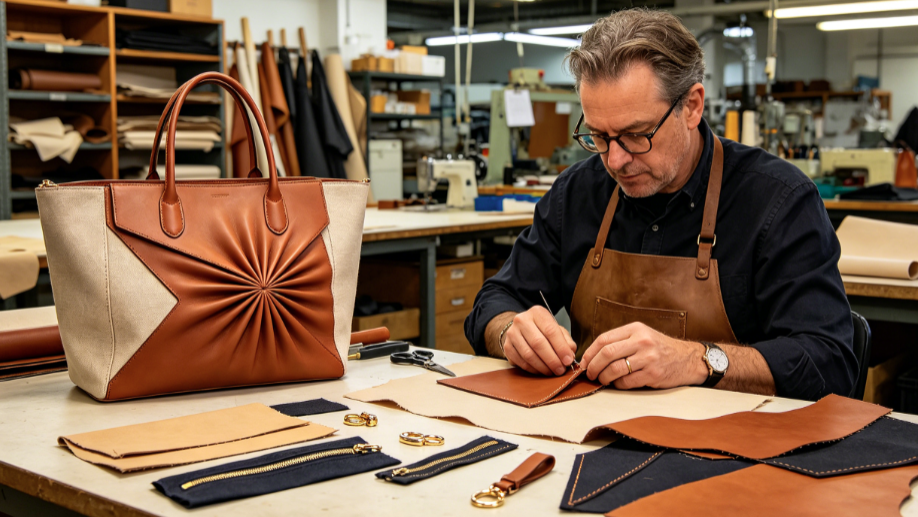
Creative Crafts runs a clear, step-by-step design process. It works well for buyers building new styles from scratch. Here’s what the timeline looks like:
-
Submit your client brief
-
Receive 2–3 CADs within 5–7 days
-
Get a physical sample within 10–15 days after CAD approval
-
Bulk production runs 45–60 days
-
Capabilities: Custom patterns, canvas + faux leather combinations, applique, embroidery
7. Royal Textile Mills Ltd.
Best for: Large-volume retail programs requiring consistent fabric quality
Royal Textile Mills runs at mill scale. They handle in-house weaving and knitting. This gives you stable GSM and shade control across large orders — a real advantage for supplying multiple retail stores where color inconsistencies are not acceptable.
-
Production capacity: 100,000+ pcs/month for simple totes
-
Ideal for: Multi-store retail buyers, large seasonal programs
8. Eco-Friendly Solutions Ltd.
Best for: Sustainable fashion handbags made from bamboo and jute
Eco-Friendly Solutions works with bamboo fabric (150–220 g/m² GSM, often blended with cotton) and jute. They use water-based inks to keep an eco-authentic look. Their single-color logo print keeps the overall aesthetic clean and natural.
-
Materials: Bamboo, jute, organic blends
-
Inks: Water-based (low environmental impact)
-
Use case: Reusable shopping handbags, eco fashion collections
9. Global Packaging Industries
Best for: Ultra-high-volume buyers needing the lowest unit cost
Global Packaging is built for scale. Their cost model focuses on limited fabric variety, standard handle lengths, and 1–2 color prints. This cuts unit cost on large runs without overcomplicating production.
-
Order range: 10,000–100,000 pcs for chain retail clients
-
Price benchmark: ~US$0.60–1.50 per basic tote at scale
-
Best suited for: Open-top totes without complex hardware
10. Leatherina / Ocasun Team (Dhaka)
Best for: Premium sustainable leather handbags — women-owned, handmade
Founded in 2016, Leatherina stands out as one of Bangladesh’s top leather handbag producers. Every bag is handmade. They use sustainable leather — cow, goat, or buffalo — at 1.2–1.8 mm thickness. Hardware is nickel-free and lead-free, meeting EU REACH standards.
-
MOQ: 50–100 pcs (proto/small batch); 200–500 pcs (regular export orders)
-
Lead time: Sample 10–20 days; bulk 60–75 days from PO
-
Stitching: 5–7 stitches/cm (retail grade)
-
Sustainability: Reduced-chrome or chrome-free tanning; off-cut leather goes toward small leather goods
-
Positioning: Premium ethical manufacturing — a great fit for brands that lead with sustainability storytelling
Why Source Custom Handbags from Bangladesh? (Cost, Quality & Supply Chain Advantages)
Bangladesh ranks second in garment and textile exports worldwide — behind only China. In the 2024/25 fiscal year, the country posted $48.28 billion in total exports. Apparel and related goods made up over 81% of that figure. That scale of manufacturing is a real advantage for handbag buyers.
Here’s why the numbers matter for your sourcing decision:
Labor costs run 50–67% lower than China. The minimum wage in Bangladesh’s textile sector sits at 8,000 BDT (~$73 USD) per month. Chinese manufacturing minimums run 2–3× higher. For mid-range custom handbags in the FOB $8–20 range, that gap gives you 30–50% savings on cut-and-sew labor alone.
Duty advantages are a major win — especially for EU buyers. Bangladesh is a Least Developed Country (LDC). That status qualifies it for the EU’s EBA (Everything But Arms) zero-tariff program. Handbags and leather goods are included. Chinese-made bags face an 8–12% import duty entering the EU. So the margin improvement for Bangladesh-sourced goods is immediate and direct.
Raw materials are available close to the factory floor. Bangladesh has a well-developed leather supply chain — cowhide, goatskin, and buffalo leather are all produced there. It is also a major jute producer on the global market. Both feed straight into handbag production. You cut import dependency and shorten material lead times at the same time.
Quick comparison snapshot:
Factor
Bangladesh
China
Vietnam
India
Min. wage (approx.)
~$73/month
~$175–290/month
Higher than BD
Higher than BD
EU tariff (handbags)
0% (EBA)
8–12%
Partial FTA
Partial GSP
Global textile/leather export share
5.1%
Significantly higher
5.9%
3.5%
There are real infrastructure limits to plan around. Port efficiency, inland logistics, and occasional power disruptions can affect timelines. Build 2–3 weeks of buffer into your delivery schedule. Also, prioritize factories near Dhaka or Chittagong — this cuts inland transit risk. Pair that with BSCI- or ISO-certified suppliers, and Bangladesh becomes a strong, competitive base for your custom handbag program.
How to Evaluate a Bangladesh Handbag Manufacturer Before Placing an Order
Picking the wrong factory costs more than the order itself — it costs time, margin, and brand reputation.
Use this checklist before committing to any Bangladesh handbag supplier:
1. Verify certifications — don’t just confirm they exist.
Ask for the original certificate number. Check the expiry date, scope, and factory address. Also request the latest audit report and the corrective action closure records. A certificate that doesn’t match the quoting entity is a red flag.
2. Check export history for category consistency.
12 to 24 months of OEM handbag shipment records tell you more than total years in business. Look for repeat orders and destination markets. Ask if they can share packing lists or bill of lading references.
3. Get production capacity in writing.
Ask for specific numbers. You want monthly output (pcs/month), sample lead time, bulk lead time, MOQ, number of production lines, and skilled headcount. Verbal promises without data are a risk signal.
4. Demand real factory evidence — not just a showroom.
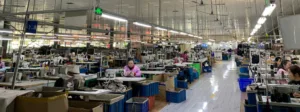
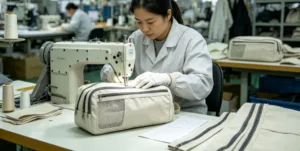
Ask for a live walkthrough video. It should cover cutting, sewing, assembly, QC, and raw material storage. The footage needs to show active operations — not a staged sample room.
5. Watch for these red flags:
– No verifiable certification number
– Pricing well below market with vague specs
– Refuses to share factory video or schedule a video call
– Quote sheet missing materials, hardware, packaging, or lead time details
Start small. Run a trial order first. Check color consistency, stitch uniformity, packaging condition, and rework rate before you scale volume.
#1 Sunteam Bag — Best for Custom Private Label Handbags with Low MOQ
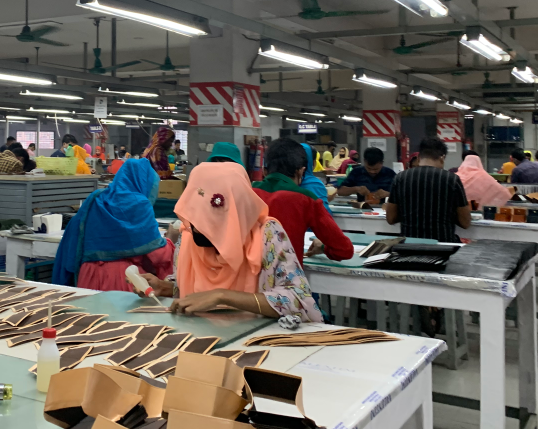
Sunteam Bag is built for small and mid-size brands. You get custom private label handbags without factory-scale minimums holding you back.
The business structure is unusual. It’s a China–Italy–Bangladesh joint venture with its own factory and tannery in Dhaka’s leather cluster. That means Italian-influenced design direction, controlled leather sourcing, and Bangladesh’s cost base — all under one roof.
MOQ is where Sunteam stands out:
-
PU handbags: 50–100 pcs/color, 150–300 pcs/style
-
Genuine leather handbags: 80–150 pcs/color, 200–300 pcs/style
-
Wallets & small leather goods: from 100–200 pcs
Most Asian leather bag factories start at 300–500 pcs per style. Sunteam’s threshold is about half that — a real advantage for smaller brands testing new styles.
FOB price benchmarks (Bangladesh):
|
Product |
FOB Price Range |
|---|---|
|
PU fashion handbags |
US$6–12 per pc |
|
Genuine leather handbags |
US$18–40+ per pc |
|
Leather wallets / SLGs |
US$8–18 per pc |
Lead times: First samples take 10–15 days. Bulk leather production runs 45–60 days. PU orders with stock materials can drop to 30–45 days.
Private label options include logo debossing, woven labels, metal logo plates, custom hardware, lining, and branded packaging. Chemical compliance meets EU REACH and California Prop 65 standards. Their in-house tannery makes this easier to control end to end.
Best fit for: Amazon and Shopify sellers, boutique retailers, and growing fashion brands targeting EU or US markets at mid-price retail ($60–200 USD).
📞 Contact: sunteambags.com | +86 18971548510 (24-hour)
#2 Apex Footwear Ltd. — Best for Large-Volume Leather Handbag Orders
Apex Footwear Ltd. ranks among Bangladesh’s largest leather exporters. They pull in ~USD 100M in annual revenue. They also hold a verified supply relationship with Marks & Spencer — as that retailer’s sole approved Bangladesh footwear supplier.
Their leather credentials carry real weight. Sister company Apex Tannery Ltd. handles the tanning side. They process full grain, lining, and nubuck cow leather using chrome tanning. Everything carries LWG (Leather Working Group) certification since 2015. For most EU and North American mid-to-premium brands, that certification is a hard requirement — not optional.
-
MOQ: ~3,000+ pcs/style (estimated); fits large retail programs, not small-batch orders
-
FOB price benchmark: USD 12–25 (mid-tier OEM); USD 25–45 (upper-mid brands)
-
Lead time to EU: ~25–35 days sea freight; North America ~30–40 days
-
Location: Shafipur, Gazipur District — close to Dhaka’s main freight corridors
Best fit for: Chain retailers moving into leather accessories. Mid-to-upper fashion brands that need steady full-grain quality across high-volume runs. Also works well for corporate gifting programs in the 5,000–200,000 pcs/year range.
Contact: Md. Firoz Alam Talukder | [email protected] | +8806822-51169
#3 Picard Bangladesh Ltd. — Best for European-Quality OEM/ODM Handbags
Half of all PICARD Germany bags are made here. That single fact tells you everything about what this factory can do.
Picard Bangladesh Ltd. started in 1997 as a Bangladesh–Germany joint venture. It runs out of Ashulia, Savar, Dhaka. The factory makes mid-to-high-end leather handbags, business bags, and small leather goods. Clients include PICARD Germany plus brands in Australia, Italy, Japan, and Singapore.
-
Product tier: Mid to high-end leather bags and accessories
-
OEM/ODM exports: Germany, Italy, Japan, Singapore, Australia
-
MOQ benchmark: 300–500 pcs/style (EU mid/high-end standard)
-
Sample lead time: 3–4 weeks; Bulk lead time: 60–90 days
The German co-founder background keeps quality standards tied to European norms. Think stitch density, handle pull-tests, AZO-free dyes, and REACH-compliant hardware. For EU brands, that’s a real built-in edge — no need to re-educate the factory on compliance basics.
Best fit for: EU and US brands sourcing European-spec leather handbags at Bangladesh cost levels. This works well for women’s fashion bags and business bags running seasonal collection cycles.
#4 BLJ Bangladesh Corporation Ltd. — Best for Japanese-Craftsmanship Leather Handbags
Japanese artisan expertise. Bangladesh factory costs. BLJ brings both together.
BLJ Bangladesh Corporation Ltd. started in 2013. The factory built its roots supplying Business Leather Factory (BLF) — a well-known Japanese leather brand. Today, Japanese chairman Kazunari Taguchi and Japanese director Masayoshi Suzuki lead quality oversight on the floor. You get minimalist Japanese design precision, priced at Bangladesh production rates.
-
Workforce: 650 employees (623 production, 27 management)
-
Certifications: ISO 14001:2015 (environmental management)
-
MOQ benchmark: 200–300 pcs/style for leather handbags; 50–100 pcs for pilot development orders
-
Lead time: 60–90 days (first orders); 45–60 days (repeat styles)
-
Export markets: Japan and EU
Best fit for: Brands selling into Japanese or European retail channels. You need clean-edge structured handbags and strict QC — but not a Made-in-Japan price tag. BLJ fits that gap well.
Contact: [email protected] | +8801324718993 | Instagram: @bljbangladesh
#5 Venezia Crafts & Leather Goods — Best for Mid-to-High-End Custom Leather Handbags
Venezia Crafts & Leather Goods started in 2010 and operates out of Ashulia, Savar. They’ve grown into one of Bangladesh’s stronger names in quality leather handbags and small leather goods. Their LFMEAB membership shows a clear focus on exporting to EU, US, and Asian brand buyers.
Core product range: structured women’s handbags, crossbody and shoulder bags, totes, wallets, card cases, and corporate gifting collections — all in genuine cow or goat leather.
Key specs at a glance:
-
MOQ: 300–500 pcs/style/color (handbags); 500–800 pcs (SLG)
-
Sample lead time: 7–14 days from a finalized tech pack
-
Bulk lead time: 60–90 days from PP sample approval
-
FOB price range: USD 18–28 (standard structured handbag); USD 30–50 (premium multi-compartment styles)
-
Stitching density: 6–8 stitches/cm — mid-to-high-end retail grade
-
Hardware: Zinc alloy or brass with nickel-free plating (EU compliant). You get YKK zippers on the higher-end lines.
They meet REACH and BSCI/SEDEX audit standards. This covers the full scope of EU-bound leather goods requirements.
Best fit for: Mid-range fashion brands targeting USD 150–350 retail price points. You get genuine leather construction at a fraction of European factory costs.
Contact: Via LFMEAB directory — Zirabo, Ashulia, Savar, Dhaka-1341
#6 Apex Tannery Ltd. — Best for Custom Leather Sourcing with Full Chain Control
Apex Tannery Ltd. runs the full chain under one roof — from raw hide to finished leather — at Savar Leather Industrial Park. Few suppliers can say that.
They’re a B2B leather supplier, not a finished bag factory. That’s the point. Your brand sets the material specs — thickness, grain, color, hand-feel. You work with Apex to build the leather to those specs, then send it to a cut-and-sew partner for final production.
What makes Apex worth noting:
-
Leather types: Full grain, nubuck, lining, garment, and bag leather (1.4–2.0 mm for handbags)
-
Tanning options: Chrome, vegetable, or combination — using Italian chemicals and process standards
-
Color matching: Pantone-referenced, with ±0.5–1 ΔE batch consistency
-
Export reach: 30+ countries; clients include Clarks, Coach, Kate Spade, and Timberland
-
Certifications: ISO 9001, ISO 14001, ETP wastewater facility (~$980K investment), ISA TanTec sustainability partnership
MOQ reality check: Apex targets mid-to-large volume buyers. Custom leather projects start at 300–500 sq ft per color. Small-batch brands aren’t the right fit here. For buyers running annual leather programs, though, you get stable specs and EU-compliant materials at Bangladesh cost levels. That’s a real advantage.
Best fit for: OEM handbag brands with project-level leather specs, EU or Japanese buyers who need traceable sustainable sourcing, and supply chain teams building end-to-end Bangladesh production.
#7 Leatherina Ltd. — Best for Ethical & Sustainable Handbag Production
Ms. Taslima Miji founded Leatherina in 2016. It’s a women-owned, fair-trade-aligned leather goods manufacturer based in Savar, Dhaka. Skilled artisans handcraft every single bag. Their Mission ∅ Waste program focuses on cutting waste across the production floor. The company also holds a firm commitment to UN SDG 12 on responsible consumption.
-
MOQ: ~30–100 pcs/style (small-batch friendly)
-
Customization: Logo embossing, material co-development, textile linings sourced from fair-trade suppliers
-
Materials: Leather options with low environmental impact; vegetable-tanned or low-impact processes are the standard here
-
Best fit for: ESG-reporting brands, sustainable fashion labels, limited-edition ethical drops
Contact: Ms. Taslima Miji | +880 1750242685 | Shyampur Road, Hemayetpur, Savar, Dhaka 1340
#8 Yuko Leather Goods Ltd. — Reliable Mid-Size OEM Handbag Manufacturer
Yuko Leather Goods Ltd. started in 2009. They run out of a 21,000 sq ft facility in Uttara, Dhaka. Four dedicated production lines, 100% export-focused, built around Japan-market quality standards.
That Japan focus matters. Supplying Japanese brands means tighter tolerances, stricter finishing checks, and steady batch quality. Your brand gets the same standard Yuko delivers to Japanese clients.
-
MOQ: 150–300 pcs/color/style (handbags); 500–1,000 pcs per PO
-
Capacity: ~30,000–50,000 pcs/month
-
Lead time: Sampling 10–20 days; bulk 60–90 days
-
FOB benchmark: US$18–35 (women’s leather handbags); US$25–45 (backpacks/briefcases)
-
Products: Genuine leather handbags, backpacks, briefcases, small leather goods
Japan liaison: Cosmo Cross Co., Ltd., Asakusa, Tokyo. Useful if you work through a Japanese trading company.
Contact: [email protected] | +8809613604040
#9 Lidia May — Best for Luxury & Artisan-Level Handbag Production in Bangladesh
Lidia May breaks one of the biggest myths in handbag sourcing: that Bangladesh can’t produce luxury goods.
The brand has been active since 2015. It combines centuries-old Bengali karchupi hand embroidery with classic European leather silhouettes — what Forbes described as luxury “made in Bangladesh.” Local craftsmen train in the European Leather Craft tradition and build each piece in small batches. The signature Leather Ronni Tote is the strongest proof of what that mix can deliver.
The brand runs on a clear idea — “Luxury with a purpose.” That means premium construction and social responsibility go hand in hand. Most artisans are women. Ethical sourcing and community impact are core to how production works, not added on for marketing.
-
Craft signature: Structured leather construction + karchupi hand embroidery
-
Production scale: Small-batch, artisan-led
-
B2B relevance: A strong reference point for luxury-capable, craft-focused handbag production in Bangladesh
-
Best fit for: Premium brands that need heritage embellishment, ethical-luxury storytelling, or artisan-made positioning
Note: OEM/MOQ terms are not listed on their site. Reach out through lidiamay.com or their Instagram/Facebook channels for B2B inquiries.
#10 BagBangla — Best for Custom Fashion Bags with Fast Turnaround
Speed is BagBangla’s strongest card. They can complete 1,000 custom bags in just 3 days. That covers everything — raw material planning, cutting, sewing, QC, printing, and packing. For buyers who need fast output, that’s a hard number to beat.
Product range: fashion totes, crossbody bags, mini bags, school and travel backpacks, canvas shoppers, and drawstring bags. Every style supports custom pattern development.
Key specs:
-
MOQ: 100–300 pcs (canvas totes); 200–500 pcs (PU fashion bags); 300–500 pcs (backpacks)
-
FOB price range: US$0.70–2.00 (basic totes); US$4–15 (PU women’s bags); US$3–8 (backpacks)
-
Sample lead time: 3–5 days (existing patterns); 5–10 days (new development)
-
Bulk production: 7–15 days for 100–1,000 pcs simple styles
-
Branding options: screen print, heat transfer, digital print, embroidery, woven labels, PU patches, metal logo plates
Best fit for: Fast fashion buyers who run small, frequent drops (1,000–5,000 pcs per style). Also a solid pick for Amazon or TikTok Shop sellers who need quick restocks. Plus, corporate gifting buyers working against tight event deadlines will find the turnaround times very useful here.
Bangladesh vs China vs Vietnam: Handbag Manufacturing Cost & Quality Comparison
Three countries dominate Asia’s handbag export market. Here’s how they stack up — by cost, quality, and fit for your order type.
Labor Costs: Bangladesh Wins on Price, China Wins on Skill
|
Country |
Avg. Monthly Wage |
Hourly Rate (approx.) |
|---|---|---|
|
China |
~$540/month |
~$6.50/hr |
|
Vietnam |
~$220/month |
~$2–3/hr |
|
Bangladesh |
~$120–200/month |
~$0.60–1.30/hr |
Bangladesh has the lowest labor cost by a wide margin. But there’s a catch. Skilled leather workers are harder to find here than in China or Vietnam. Complex structured bags — multi-compartment builds, fine edge painting, hidden stitching — take more hours in Bangladesh factories to reach the same finish level. That eats into the cost advantage on premium styles.
Material Availability: China Has the Edge
China runs a full supply chain. PU leather, hardware, zippers, lining fabrics — all sourced locally, in almost any spec, with flexible MOQs. Vietnam brings in most premium materials from China. That adds 7–15 days and extra freight cost to your production timeline. Bangladesh has a solid local leather base (cowhide, goat, buffalo), but EU-compliant premium hides often need to be imported. Expect to pay 5–15% more than the equivalent Chinese-sourced leather.
Quality & Defect Rates
-
China: 1–3% defect rate on mid-to-high-end bags. Process control is strong. Dimensional consistency is reliable.
-
Vietnam: 2–4% on export-grade bags. Quality is closing the gap with China fast — especially on backpacks and travel bags.
-
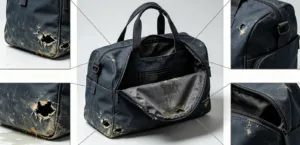
Bangladesh: 3–7% is the typical range. Problems show up most in color consistency, hardware installation, and interior finishing. Plan for more on-site QC visits.
What Each Country Does Best
-
China: Complex women’s fashion bags, structured leather handbags, technical outdoor packs
-
Vietnam: Travel bags, laptop bags, branded backpacks — strong fit for EU/US outdoor brands
-
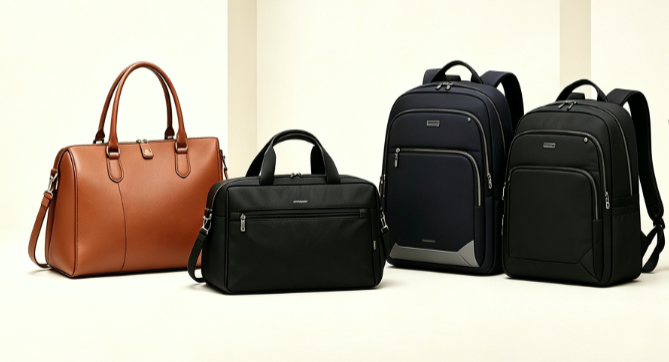
Bangladesh: High-volume promotional bags, simple totes, basic PU fashion bags — best suited to straightforward designs at large quantities
Where Bangladesh Makes Sense
Bangladesh gives you the strongest value at 20,000+ units per style. The design needs to be structurally simple. EU zero-tariff (EBA) savings also tip the math in its favor. Smaller runs with complex construction? China or Vietnam will outperform on both quality consistency and total landed cost.
Custom Handbag Manufacturing Process: From Design to Delivery in Bangladesh
Every Bangladesh factory runs the same core production flow: requirements confirmation → design & tech pack → material selection → sample development → sample approval → bulk production → QC → packaging & shipment.
Here’s what each stage looks like in practice:
|
Stage |
Typical Timeline |
|---|---|
|
Design & tech pack |
3–7 days |
|
Sample development |
10–15 days |
|
Sample revision |
7–10 days |
|
Bulk production |
30–45 days after approval |
|
QC inspection |
2–5 days |
First order total: Plan for 2–4 weeks of sampling, plus 30–45 days for production. That’s with complete specs in hand. Repeat orders go faster. The factory reuses approved patterns and BOM, so the wait is just material replenishment and production scheduling.
What Causes Delays
Most Bangladesh sourcing delays come from the same four problems:
-
Incomplete tech pack — missing dimensions or material specs stop pattern-making before production can start
-
Late material confirmation — unconfirmed trims or leather push back the cutting start date
-
Sample revisions — structural or hardware changes after testing add 7–10 days per round
-
QC failures at final inspection — rework cuts into your shipping window
How to Keep Your Order on Schedule
Submit a complete tech pack upfront. Cover dimensions, construction details, colors, materials, hardware, logo placement, and packaging — all of it, in one go. Approve materials before sample lock. Set one clear rule: no bulk start until sample, color, hardware, and packaging are all signed off in writing. No exceptions.
MOQ, Pricing & Lead Time: What to Expect from Bangladesh Handbag Factories
MOQ varies more than most buyers expect — and the gap between factory types is real.
MOQ by product type:
– Basic canvas / stock styles: 50–200 pcs
– Single-color logo customization: 200–500 pcs
– Complex designs, multi-color print, special fabrics: 500–1,000+ pcs
– Premium eco materials (organic cotton, recycled polyester): 1,000+ pcs
Before you compare quotes, confirm three things. First, check whether MOQ is calculated per style, per color, or per size. Second, ask whether mixed-style or mixed-color bundling is allowed. Unit price often goes up when bundling is permitted.
On pricing, always request a full FOB breakdown: unit price + sampling fee + packaging + inspection + port charges. Without that, comparing factories becomes guesswork. The main cost drivers are leather grade, hardware complexity, embellishment type (embossing, embroidery, edge painting), and compliance requirements.
Lead time structure:
– Sampling: 7–14 days
– Bulk production: 30–60 days post-approval
– Sea freight to EU/US: 22–30 days
For payment, T/T 30% deposit + 70% against B/L is standard practice. Plan your total timeline with all three stages in mind. Sea freight dates are not your production deadline — they come after it.
Certifications & Compliance: What Bangladesh Handbag Manufacturers Should Have
Certifications separate reliable Bangladesh factories from risky ones. Here’s what to look for — and how to verify each one.
The three core certifications that matter most for handbag buyers:
-
amfori BSCI — This covers social compliance across 13 areas: fair wages, safe working conditions, no child labor, ethical business conduct, and more. It’s essential for EU and US brand orders. Ask for the factory’s current audit grade (A through E). Get the corrective action list from the last audit too.
-
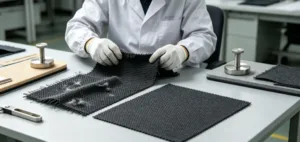
ISO 9001:2015 — This confirms a documented quality management system exists: incoming inspection, process control, defect tracking, and CAPA records. Check that the certificate scope lists “bags, handbags, leather goods” — not just “garments.”
-
OEKO-TEX STANDARD 100 — This tests all textile components for harmful substances: heavy metals, azo dyes, phthalates, formaldehyde. It’s valid for one year. Make sure the certificate covers your actual materials — shell fabric, lining, webbing, threads, and labels.
Strong factories tend to hold a group of certifications: ISO 9001 + BSCI + OEKO-TEX. Some add GOTS, GRS, SEDEX, or SA8000 based on their customer base.
Always verify — don’t just collect PDFs. Check BSCI status through the amfori platform. Validate ISO 9001 certificates via the issuing body’s database. Confirm OEKO-TEX certificates on the official OEKO-TEX search tool using the certificate number. A certificate that doesn’t match the factory name, address, or scope on your contract is a hard stop.
EU shipments bring extra requirements. Factories need to manage REACH compliance — for PU materials (phthalates), metal hardware (nickel, lead), and dyed fabrics (azo dyes). US orders add California Prop 65, which hits harder on PVC or plasticized PU components. Build chemical testing into your development process. Don’t leave it only for final QC.
FAQ: Everything Buyers Ask About Sourcing Custom Handbags from Bangladesh
Buyers ask the same questions before every first order. Here are direct answers.
What’s the minimum order quantity?
It depends on the product type. Private label on existing factory styles: 100–200 pcs. Basic PU bags: 300–500 pcs. Genuine leather OEM: 150–300 pcs. Custom designs with hardware molds need 500–1,000 pcs. That’s because mold setup costs spread across more units.
What does pricing look like?
– Basic PU tote/crossbody: US$3–6 FOB at 500+ pcs
– Mid-range PU handbag: US$6–10 at 300–500 pcs
– Full-grain leather handbag: US$18–35 at 200–300 pcs
How long does the whole process take?
Sampling runs 7–15 days. Bulk production adds 30–75 days on top of that. Material choice affects the timeline most. Total inquiry-to-shipment: 60–120 days.
What payment terms are standard?
T/T 30% deposit, 70% before shipment. Larger orders ($20,000+) often require L/C.
How do I verify a factory is legitimate?
Ask for their Trade License, TIN, VAT registration, and Export Registration Certificate. Then cross-check each one through official channels. Don’t take PDFs at face value — contact the issuing body to confirm.