
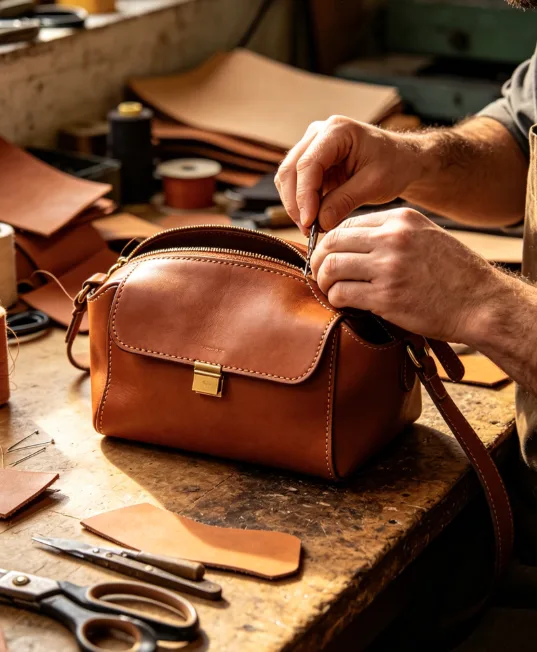
Why Source Custom Handbags from Thailand? (OEM Market Overview)
Thailand’s handbag manufacturing sector is growing fast — projected at a 16% CAGR through 2029. That’s not a coincidence. Global brands are rethinking where they source, and Thailand keeps coming up as the answer.
So what sets Thailand apart from China and Vietnam for custom bag production?
-
Craftsmanship positioning: Thai factories build their reputation on fine stitching, hand-weaving, and artisan detailing. That “Thai craft + modern design” identity carries real weight at retail — we’re talking 60–130% margin potential in EU/US markets.
-
Flexible MOQs: Most Thai OEM handbag factories start at 100–300 pcs per style. China usually requires 300–500+. That gap matters a lot for emerging brands testing new SKUs.
-
Material quality: Thailand ranks among the world’s largest natural rubber exporters. Local factories also hold direct ties with Italian and Korean leather suppliers. For genuine leather + premium hardware orders, Thailand beats Vietnam on sourcing strength.
-
Cost positioning: FOB pricing sits 5–15% above Vietnam but 5–20% below mid-to-high-end Chinese factories. That’s the sweet spot for brands targeting $40–250 retail price points.
Thailand’s export infrastructure is solid and battle-tested. Exports account for 58–65% of GDP — so factories here deal with EU/US compliance, origin certification, and on-time delivery every day. You get a sourcing partner that already knows the rules and runs on schedule, from day one.
TNLX – Best OEM/ODM Leather Handbag Factory in Thailand for Global Brands
TNLX (Thanulux Public Company Limited) has been making leather goods since 1983. That’s over 40 years of OEM handbag production experience. Few Thailand-based factories come close to that track record.
Their headquarters sits in Bangkok, with three production bases total — Bangkok, Lamphun in the north, and Mae-Sod near the Myanmar border. Across all sites, TNLX runs with 850 workers. Annual output hits 162,000 handbags and 540,000 small leather goods. That scale holds up well against global brand seasonal order cycles without breaking a sweat.
Their client list tells you a lot about where they stand. TNLX has produced for GUY LAROCHE (French fashion), DAKS (British heritage brand), ARROW, and several established Thai labels with department store distribution. Their QC and delivery standards meet large retail supply chain requirements — not just small workshop output.
What TNLX offers for OEM/ODM partners:
-
Full-cycle service: tech pack review → prototype → mass production
-
Custom logo options: embossing, foil stamping, metal badge
-
Hardware customization with salt-spray corrosion testing
-
Lining color/print customization — color deviation controlled to ΔE ≤ 3
-
MOQ starts at 300–500 pcs/style for handbags; 500–1,000 pcs/style for SLG
Sampling runs 3–5 weeks from initial brief to final pre-production sample. Bulk production takes 60–90 days FOB Thailand for handbag orders.
Best fit for: Established brands or growth-stage labels sourcing genuine leather handbags and SLG at mid-to-premium price points. This is a strong match for brands targeting EU, UK, or Asian department store channels.
📧 Contact: [email protected] | [email protected]
🌐 tnlx.co.th/en
Suvino Corporation – Premium Bangkok Leather Bag Factory Since 1987
We’ve been shipping genuine leather handbags to Europe and Japan since 1987. That’s before most of today’s DTC fashion brands even existed. 37 years of non-stop export production — built on one principle: quality that exceeds expectation, delivered on time.
Mrs. Nopharat Winyoopradist founded Suvino as a one-stop Bangkok leather OEM factory. Our team runs 120–150 production staff. Each month, we produce 3,000 handbags and 6,000 wallets. Advanced imported cutting and sewing machinery keeps edges clean, seam spacing consistent, and panel tolerances tight.
What Suvino offers OEM partners:
-
Full-cycle service: concept/idea → pattern development → sampling → bulk production → export
-
Wide selection of local and imported leather and hardware — one of the largest available in Bangkok
-
Product range: lady’s handbags, wallets, men’s bags, and pet leather accessories
-
Custom OEM across “any kind of leather product in any style”
Best fit for: Light-luxury and upper mid-range brands selling in EU or Japanese retail. You get genuine leather production at 100–300 pcs MOQ per style, with export compliance already built in — no extra hoops to jump through.
🌐 suvino.com
Thailand Made Bags Supplier – Low MOQ Custom Bags for Startups & Small Brands
Most Thai handbag factories want 300+ pcs before they’ll even talk to you. Thailand Made Bags Supplier works a different way.
Based on Sukhumvit 105 in Bangkok, this supplier calls itself “No.1 Supplier of fashionable bags in Thailand for women.” The focus is clear: startups, creatives, and boutique brands that need small, manageable first orders. Their tagline puts it straight: “Low MOQ, High-End Results.”
What they produce:
-
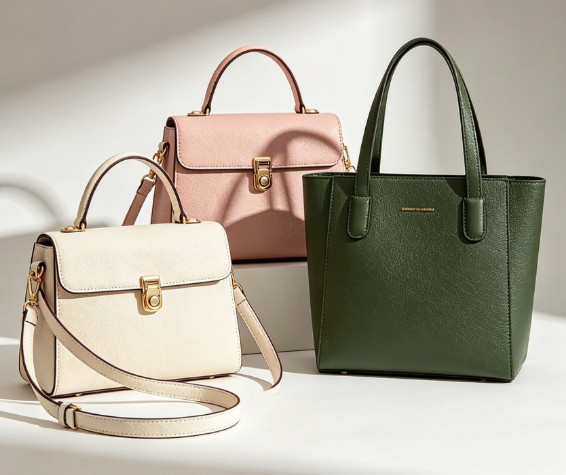
Top handle bags, crossbody/shoulder bags, totes, mini bags, and occasion/party bags
-
Main materials: PU/synthetic leather (60–70% of orders), canvas, and polyester — genuine leather is also available for small premium runs
-
Style direction: urban women’s fashion, not outdoor or technical
MOQ and pricing reality for startups:
They don’t publish exact MOQ numbers. Based on their startup focus, expect 50–150 pcs per style/colorway. That’s well below the 300–500 pcs most mid-size Thai OEM handbag factories ask for. FOB pricing for PU fashion bags typically runs US$4–8/pc at this volume tier. A first collection of 3–5 styles at 50–100 pcs each fits within a US$2,000–4,000 total budget, including sampling and shipping.
Order process:
-
Send reference images + target quantity via Facebook Messenger or WhatsApp (+66 90 330 9688)
-
Get a quote based on style complexity, material, and volume
-
Confirm your sample — production takes 7–15 days, international delivery takes 3–7 days
-
Pay a 30–50% deposit and go into production — 20–35 days for small runs
-
Ship worldwide via air freight or sea LCL
Best fit for: DTC startups, Instagram/TikTok shop owners, and designers doing limited-edition runs. This works best for those who put speed, low entry MOQ, and fashionable women’s styles ahead of formal third-party QC certifications.
⚠️ Not the right fit if you need ISO 9001, BSCI audits, or third-party lab reports (REACH/CA Prop 65). For compliance-heavy retail buyers, check out TNLX or Suvino instead.
📘 Facebook: Thailand Made Bags Supplier
📞 WhatsApp: +66 90 330 9688 | Location: Sukhumvit 105, Bangkok
Suvino Corporation – Thailand Handbag Factory Specializing in Luxury & High-End OEM
Suvino Corporation has been doing genuine leather OEM production since 1987. That’s 37 years of hands-on factory experience. Located in Pathum Thani, just outside Bangkok, they handle everything in-house: design → pattern → sampling → cutting → stitching → QC → packing → export. No subcontractors. No hand-offs.
What sets them apart at the luxury tier:
-
Material standard: Genuine leather is the default. You get top-grain cowhide (1.2–1.6 mm for handbags), vegetable-tanned options, and exotic skins like crocodile and python — sourced through regional networks
-
Craftsmanship detail: Edge painting uses multiple coats with sanding between each layer. Machine stitch runs at 3.0–3.5 mm as standard. Stress points and handles get hand-finishing when the spec calls for it
-
Custom hardware: Brass or zinc die-cast logo hardware with gold (up to 1.0 μm), silver, or brushed finishes. MOQ runs ~300–500 sets per mold
-
QC structure: Incoming material inspection → in-process AQL 1.5–2.5 → final AQL 0.65–1.0 for EU/Japan-bound orders
Best fit for: Upper-mid to premium brands selling into EU, UK, or Japanese retail. This works well for brands that need REACH-compatible documentation and multi-stage QC built directly into the production agreement.
📞 +66-92-596-9559 | ✉️ [email protected] | 🌐 suvino.com
Thailand Made Bags Supplier – Bangkok Wholesale Handbag Supplier for Fashion Retailers & Distributors
MOQ: 100 pcs mixed design (~$6,000 USD) | Est. unit price: ~$60/pc FOB Bangkok | Location: Sukhumvit 105, Bangkok
This supplier runs a dual-track model most Bangkok factories don’t offer: ready-stock wholesale + OEM production on the same account. That’s a real advantage for distributors and retailers. You get fast replenishment on proven styles. Plus, you can build exclusive OEM versions of your top sellers — all under one account.
Who this works for:
– Fashion boutiques and mid-tier department store buyers
– Amazon/Shopify brand owners targeting $150–250 retail price points
– ASEAN regional distributors placing 500–2,000 pcs seasonal orders
Start with the 100 pcs mixed-design MOQ. It lets you test multiple styles before locking into OEM tooling costs. Confirm your bestseller first. Then add logo, hardware, and lining customization — minimum 200–300 pcs per OEM style.
📞 +66 90 330 9688 | 📍 Sukhumvit 105, Bangkok
Manufacturer 6 – Custom Tote Bag & Canvas Handbag Manufacturer Thailand
Location: Chiang Mai, Thailand | Specialty: Cotton Canvas, Linen & Eco-Textile Bags | MOQ: 100–300 pcs
Chiang Mai’s family-run canvas bag factories fill a gap that leather OEM manufacturers can’t. You get ultra-low MOQs, fast turnaround on corporate gifting orders, and real eco-material credentials. These factories connect well with EU and US buyers who care about sustainability.
Core product range:
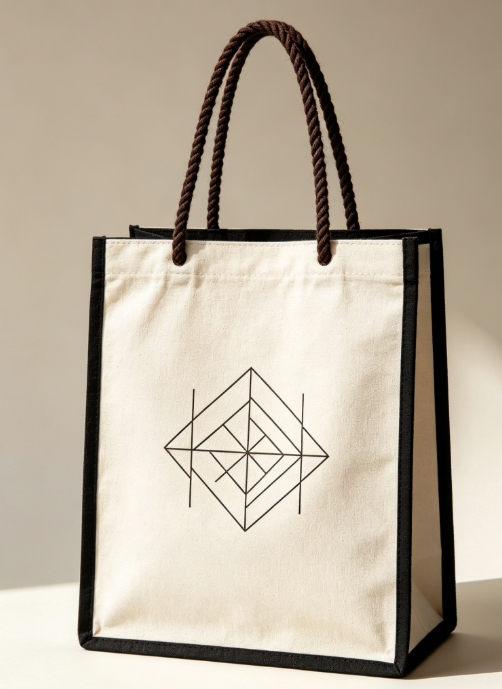
– Cotton canvas totes & shoppers (8–16 oz/yd²)
– Linen, hemp, and recycled eco-textile handbags
– Corporate gift bags with screen print, embroidery, or foil logo options
MOQ reality vs. leather factories:
|
Order Type |
MOQ |
|---|---|
|
Standard screen-print tote |
100–300 pcs |
|
Multi-color / structured styles |
300–500 pcs |
|
Organic cotton / GOTS fabric |
300–1,000 pcs |
Leather OEM factories require 500–1,000 pcs minimum. Canvas bag production flips that number on its head. You can start much smaller and still get full logo customization.
Best fit for: Corporate event organizers, brand merchandise buyers, and eco-conscious DTC labels. These factories work well for orders of 100–3,000 pcs with logo customization delivered in 3–4 weeks.
Manufacturer 7 – OEM Handbag Factory Thailand with ISO-Certified Quality Management
ISO 9001 + ISO 14001 certified | MOQ: 100–200 pcs/style | Lead time: 15–30 days sampling, 45–75 days bulk
ISO certification splits factories into two groups. Some say they have quality control. Others can prove it. TNLX (Thanulux Public Company Limited) falls in the second group. They hold both ISO 9001 (Quality Management) and ISO 14001 (Environmental Management). This covers OEM production of leather handbags, small leather goods, and accessories for international brands.
Their QC runs three stages:
-
IQC: Incoming materials are sampled at AQL 1.0–1.5. Leather thickness tolerance stays at ±0.1–0.2 mm. Each zipper goes through ≥50 open/close cycles before it clears inspection.
-
IPQC: First-piece approval plus line patrol every hour. Stitch rate stays at 6–8 SPI. Handle length tolerance: ±3 mm.
-
FQC: Final shipment gets inspected at AQL 0.65 (critical) / 1.0–1.5 (major) per ANSI/ASQ Z1.4. Records are kept for ≥3–5 years.
EU and US buyers can request third-party inspections through SGS, Bureau Veritas, or Intertek. TNLX’s ISO documentation keeps CAPA responses fast and clean. You get full audit trails with no scrambling.
Best fit for: Mid-to-premium brands supplying EU/US retailers. You’ll need documented QC, environmental compliance, and audit-ready supplier records — TNLX checks all three boxes.
📧 [email protected] | [email protected]
Manufacturer 8 – Small MOQ Handbag Manufacturer Thailand for Boutique & Indie Brands
MOQ: 100–300 pcs/style | Sample fee: US$50–150 (credited back on bulk PO) | Lead time: 30–60 days bulk
Most mainstream Thai bag factories set their custom brand MOQ at 1,000 pcs per model. This manufacturer drops that number to 100–300 pcs per style. It’s built for boutique labels, indie designers, and first-time founders who need a real production partner — not a warehouse minimum.
What the low-MOQ structure looks like:
-
Synthetic leather / canvas styles: 50–100 pcs per color per style
-
All colorways combined per style: 100–300 pcs
-
Genuine leather styles: ≥100 pcs per style
-
Sample fees run US$50–150, credited back once your bulk PO clears the agreed MOQ threshold
Design collaboration built for remote indie clients:
-
Full tech pack acceptance (PDF/AI with BOM, dimensions, hardware list)
-
In-house pattern development: 5–10 working days for standard styles
-
2D CAD sketches + 3D previews (now more available) to cut down physical sample rounds
-
Pantone-matched material sourcing across PU, canvas, cowhide, and hardware
Sampling-to-production risk controls:
The process moves in clear stages — spec alignment → prototype (7–21 days) → revised samples → PP sample approval → bulk production. The deposit (30–50%) releases after PP sample sign-off. No earlier. Any major deviation from the approved sample triggers rework or a discount clause. Every checkpoint goes through WhatsApp/email with photo and video confirmation. That makes it easy for buyers who can’t visit the factory in person.
Best fit for: First-time brand founders and boutique labels launching 3–5 SKUs at 100–200 pcs each. Repeat-order rates at comparable Thai indie-focused OEMs run ≥40–60% within 18 months. That’s a strong signal — small brands keep coming back once the first run goes well.
Manufacturer 9 – Verified Thailand Handbag OEM Supplier with Export Experience to EU & US
Export regions: EU & North America | MOQ: 100–300 pcs/style | Lead time: 45–60 days bulk | Incoterms: EXW, FOB, CIF, DDP
A long export history to Europe and the US is hard to fake. It’s also the first thing you should confirm before signing any OEM agreement.
This supplier ships to EU markets — Germany, France, Italy, and the Netherlands — plus North American buyers in the USA and Canada. Product categories cover women’s leather handbags, wallets, and men’s document bags. Each order comes with export documentation, HS codes, and origin compliance as part of the standard production process.
Compliance credentials worth confirming:
– REACH chemical test reports (leather, lining, adhesives, metal trims) via SGS, Intertek, or TÜV
– California Prop 65 reports covering lead and phthalates for US-bound orders
– Substantial transformation documentation for EU/US customs origin rules
Payment and logistics flexibility:
– T/T: 30% deposit / 70% pre-shipment balance (20/80 for repeat buyers)
– L/C at sight accepted for larger orders
– FOB Laem Chabang is standard; DDP via 3PL is available for e-commerce brands
Best fit for: EU/US importers and DTC brands that want a factory with real cross-border experience. You get production capacity plus compliance infrastructure — both already in place, not built from scratch for your order.
OEM vs ODM: Which Custom Handbag Manufacturing Model Fits Your Brand?
Two letters separate a brand that owns its product from one that borrows it.
OEM (Original Equipment Manufacturing) means you bring the design. Your tech pack, your patterns, your hardware specs — the factory builds what you specify. Every version, every detail, 100% yours.
ODM (Original Design Manufacturing) means the factory brings the design. You pick from their existing catalog, add your logo, swap a color, maybe change the lining. It’s fast and affordable. But the base pattern belongs to them.
Here’s how the two models compare on the factors that matter most for handbag sourcing:
|
OEM |
ODM |
|
|---|---|---|
|
Design ownership |
100% brand |
Factory retains base pattern |
|
Customization depth |
Full (structure, leather grade, hardware, stitching) |
Surface-level (logo, color, packaging) |
|
Sample lead time |
3–6 weeks |
1–2 weeks |
|
Time to first shipment |
2–4 months |
3–6 weeks |
|
Tooling/pattern fees |
US$150–500/style |
US$0–100 (often waived) |
|
MOQ |
200–500 pcs/style |
50–100 pcs/style |
|
Unit cost |
Higher (custom materials) |
5–20% lower than equivalent OEM |
Which Model Fits Your Brand Right Now?
Choose OEM if:
– You have a clear seasonal collection plan and stable sell-through data
– Your team can produce a full tech pack — style sketch, material spec, hardware BOM, and measurement chart with tolerances
– Standing out is non-negotiable: exclusive silhouettes, custom-cast hardware, unique leather specs that no other brand can copy
Choose ODM if:
– You’re in launch mode and need product on shelves fast
– Cash flow is tight — test styles before committing to development costs
– Your strength is brand-building and product curation, not product engineering
The Hybrid Path Most Brands Miss
Most Thai handbag factories with ODM catalogs also accept OEM orders. That overlap creates a useful third option: start with an ODM base, then add OEM-level customization on top.
Take a factory’s existing tote silhouette. Keep the pattern. Upgrade the leather from PU to full-grain cowhide. Replace their stock hardware with your logo-engraved pulls. Add a custom interior laptop sleeve. You’ve built a product that’s yours — without paying for a full pattern development cycle.
This hybrid approach lands at:
– MOQ: 100–300 pcs/style (versus 200–500 pcs for full OEM)
– Development cost: 30–50% lower than building from scratch
– Timeline: 1–2 weeks shorter — no zero-base patternmaking required
For most first- and second-collection brands, this is the most cost-efficient path to a product that stands apart.
Quality Assurance Checklist: How to Verify Thailand Handbag Factory Standards
A factory’s claims and a factory’s reality are two different things. Before you sign any OEM agreement, run through this checklist. It covers the four areas where Thai handbag factories most often fall short.
Equipment & Production Setup
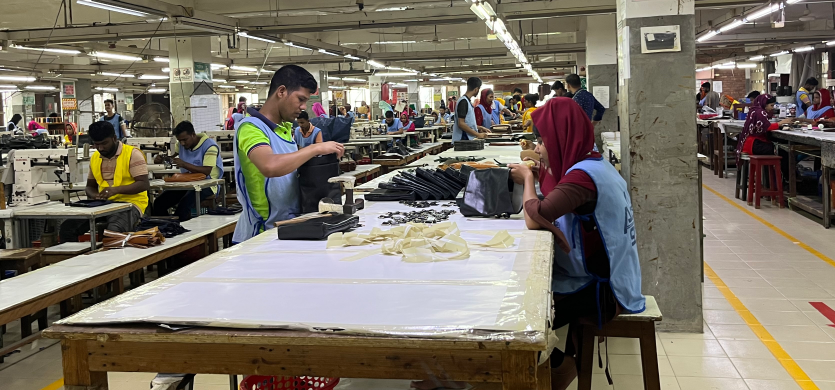
Match the sewing machine count against daily output targets. A standard line runs one skilled operator per main machine. Ask for maintenance logs from the past 12 months. Monthly servicing is the baseline — anything less is a red flag. Also confirm the factory has a pull-force test rack with at least 10 kg load capacity. A salt-spray chamber for hardware testing should be there too.
Material Verification
Check leather cross-sections directly. Genuine top-grain cowhide runs 1.4–1.8 mm thick with a visible fiber structure. For hardware, ask for neutral salt-spray test results. Plated zinc or brass should show zero red rust at 24–48 hours. Zippers need load testing by bag size. A 30–40 cm bag must hold 5 kg suspended for a minimum of 2 hours.
Sample Inspection Standards
Count stitches on a 10 mm segment. The standard for main seams is 3 to 4 SPI. Edge paint width deviation should stay within ±0.2–0.3 mm. Pull each hardware fitting by hand at 10–15 kgf. Any movement, rotation, or detachment is a Major defect. Full stop — no exceptions.
Production AQL Application
For bulk orders, use AQL 2.5 (Major) / 4.0 (Minor) / Critical 0 under General Inspection Level II. On a 1,200-piece order, you sample around 200 units. Hit more than 10–11 Major defects and the full batch gets rejected. Ask for QC reports that break down defect counts by category. Each report needs a clear Accept/Reject conclusion. Summary-only reports are not acceptable.
MOQ, Pricing & Lead Time: What to Expect from Thailand Custom Handbag Factories
Numbers first — because guessing wrong here costs real money.
MOQ by material type:
– Genuine leather handbags: 100–300 pcs/style for mid-range brands. Go up to 300–500 pcs once custom hardware or imported leather enters the spec.
– PU / synthetic leather / canvas: 50–100 pcs/style on stock materials. Add custom prints or specialty fabrics, and that jumps to 200–500 pcs.
– Eco / organic materials: MOQ climbs to 1,000+ pcs. Mills require minimums for dyeing and fabric runs.
FOB pricing benchmarks (Thailand):
– Genuine leather handbags: US$26–36/unit at 300 pcs — 10–25% above comparable Chinese OEM pricing
– PU / fashion handbags: US$7–12/unit
– Sampling fees: US$50–150/style (PU/canvas) or US$80–150/style (leather). Most factories credit this back once your bulk order hits MOQ.
Lead times to build into your calendar:
– Sampling: 2–4 weeks from confirmed tech pack + deposit
– Bulk production: 45–60 days for standard orders (100–500 pcs). Complex multi-style programs take 60–90 days.
– Repeat orders with existing patterns: 25–30 days
Thailand runs 10–25% higher than China on unit cost. So what do you get for that? Lower MOQ thresholds on leather styles. Stronger craftsmanship positioning. Plus, the factory already handles EU/US compliance on a regular basis.
How to Find & Vet Custom Handbag Manufacturers in Thailand: Step-by-Step Process
Knowing where to look cuts your sourcing timeline in half. Here’s the process — from first search to signed contract.
Step 1: Source from the right channels
– Alibaba: Filter by Trade Assurance + Verified Supplier + ≥3 diamonds + ≥5 years in business. Around 615 Thailand-related results exist. Those filters cut it down to a manageable shortlist fast.
– BIFF&BIL Bangkok trade show: Focus on exhibitors with 3+ consecutive years on the floor. These are stable export factories — not one-season workshops.
– Industry association directories: Cross-reference company names, Tax IDs, and export market percentages against what factories tell you in person. Discrepancies reveal a lot.
Step 2: Request 7 specific factory visuals
Don’t accept a brochure. Ask for these 7 visuals: exterior signage, pattern room, sewing floor (30+ machines minimum), cutting/material storage, QC station, packing area, and management office. Add 2–3 continuous videos (≥30 seconds each) showing the full production flow. A 10–20 minute live video walkthrough confirms the factory is real.
Step 3: Send a quantified RFQ + Tech Pack
Vague inquiries get vague replies. Your RFQ needs to include:
– Bag dimensions
– Material spec with thickness (e.g., 1.4–1.6mm cowhide)
– Target FOB price range
– MOQ (state your trial order: 100–300 pcs)
– Expected bulk delivery date
Attach a one-page Tech Pack with BOM, stitch count, hardware finish, and logo placement. Serious factories respond within 24–72 hours.
Step 4: Sign an NDA before sharing designs
Send the NDA before your full Tech Pack goes out. Include a fixed penalty clause. The industry standard sets this at US$10,000 or 2–3× the order value for unauthorized use or resale of your patterns.
Step 5: Control the sample-to-bulk transition
Pay sample fees upfront — US$50–150 per style for PU, up to US$300 for complex leather. Confirm whether those fees credit back at MOQ. Keep revision rounds to 1–2 changes. Lock bulk production terms to the final approved sample, not a verbal description. Set a written delivery window of 45–60 days with a grace period and penalty clause built in.