
Google Trends shows that the search interest for “Sports” and “Sports Bag” follows a highly synchronized pattern. This indicates that demand for sports scenarios directly drives purchasing intent for sports bags — users typically engage with sports first, then extend their interest to related gear and bag products. Both keywords reached their peak in early May, followed by a rapid decline, suggesting that this surge was a short-term, event-driven spike rather than sustained demand.

The data clearly reveals the core age demographics behind men’s sportswear and styling searches. The primary consumer group is aged 18–34. Among them, the 18–24 segment represents the absolute peak across all keywords, accounting for nearly 50% of total searches. This group—comprising students and early-career trend-driven consumers—is the most active audience for sports, sports bag, men’s summer outfits, and sports outfits.

The 25–34 segment forms the second key consumer group. Within this category, men’s summer outfits accounts for 43%, sports outfits 36%, sports bag 34%, and sports 33%. This reflects a strong demand among young professionals for a combination of functional sports style and summer fashion, driving interest in both performance gear and custom sports bags.
Together, these two age groups contribute over 70% of total search volume, making them the core target audience for sports bags, styling, and custom bag manufacturing solutions. In contrast, users aged 45 and above account for less than 5% across all categories, indicating relatively weak demand. This segment represents a niche, long-tail market, with preferences leaning more toward basic functionality rather than trend-driven or design-focused products.
In the context of the rising outdoor sports lifestyle trend, professional outdoor gear is rapidly penetrating everyday urban scenarios and evolving toward more stylistic expression. This analysis focuses on five key detail design trends in current sports and outdoor bags: multi-functional carabiner hooks, contrast-color webbing loops, functional rope knots, external binding systems, and partial mesh pockets.
From three dimensions—functional practicality, visual expression, and stylistic consistency—this study deconstructs how outdoor DNA is translated into modern urban bag design language. While meeting the demand for all-scenario adaptability, designers are using material contrasts, structural lines, and refined detailing to create a balance of relaxed aesthetics, light functional utility, and contemporary fashion.
This provides clear direction for brands in developing both custom bag manufacturing and OEM/ODM backpack development, offering design solutions that combine practicality with strong visual identity for the modern sports outdoor market.
Multi-form Carabiner
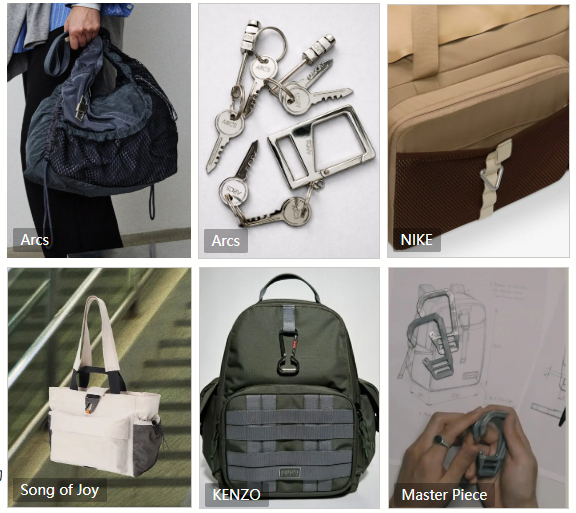
Multi-functional carabiner hooks are centered on geometric variations, metal hardware, and functional decoration. They transform the professional climbing carabiner from outdoor equipment into a practical decorative element for bags and accessories. This design achieves a dual value of both functional utility and visual symbolism, making it a signature detail in light utility and outdoor-inspired fashion styles.
In custom bag development, this detail is widely used to enhance both practicality and brand identity, strengthening the product’s differentiation in the outdoor bag market.
Multi-Configuration Carabiner — Design Case Study
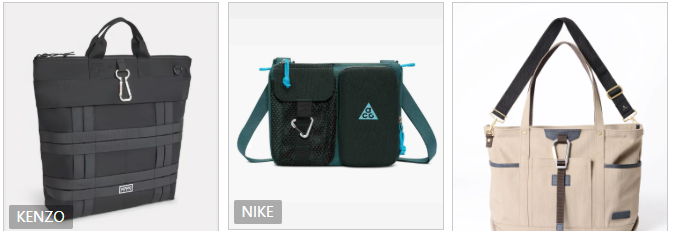
The carabiner hook is reinterpreted into a triangular geometric form, combined with subtle fluorescent contrast accents that create strong visual focal points, while still retaining its practical functions for fastening and hanging.
The core value of multi-form carabiner details lies in “small detail, strong memorability,” enabling it to quickly communicate a light utility and outdoor-inspired aesthetic, reinforcing a functional yet stylistically expressive design language.
Contrast-Color Hanging Loop
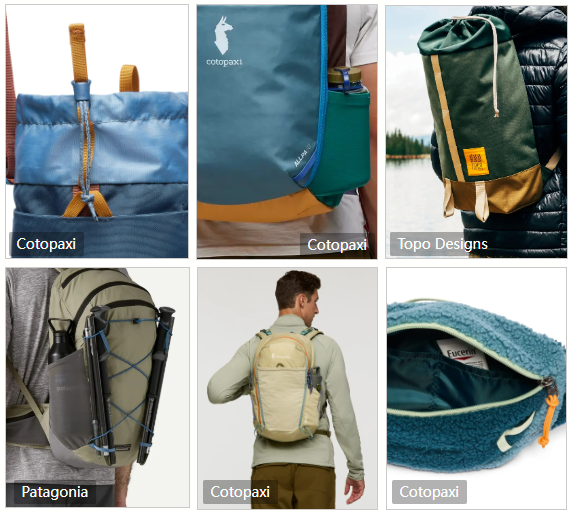
The utilitarian webbing loop structure from sports and outdoor gear is reinterpreted as both a visual design element and a functional carrier in bag design. Through high-contrast color combinations and practical detailing, it delivers a triple value of functionality, recognizability, and stylistic expression, making it a signature detail in sports and outdoor-inspired bags.
In custom backpack production, this detail is often used to enhance brand differentiation and reinforce a strong outdoor aesthetic while maintaining practical usability.
Color-blocked hanging loops — Design Case
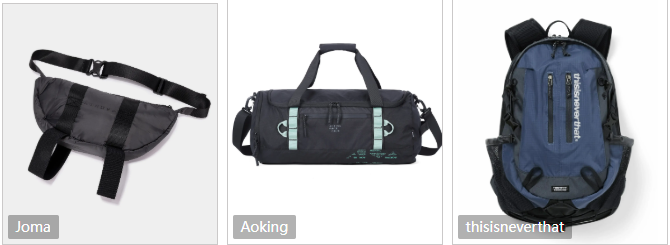
Brands such as Fjällräven use wide webbing straps combined with buckle systems to securely attach trekking poles and outdoor gear, balancing professional outdoor performance with everyday portability.
Extending from outdoor use to daily commuting scenarios, these systems can also carry umbrellas, water bottles, foldable bags, and other everyday essentials, achieving a seamless transition between outdoor and urban lifestyles.
In custom backpack design development, this structural detail is widely applied to enhance both functional versatility and product adaptability across different usage scenarios.
Functional knots
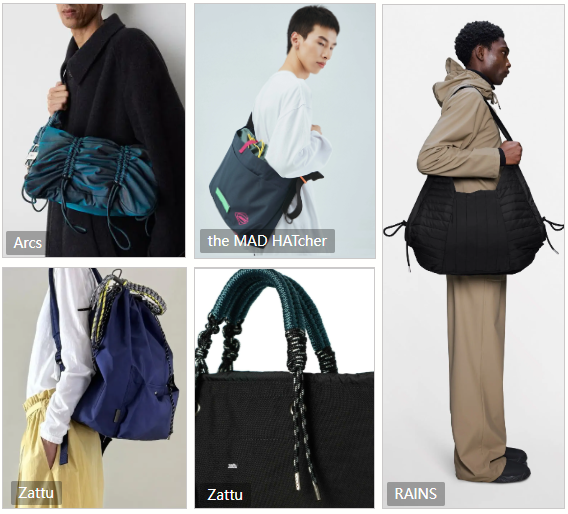
Functional knots are centered on side cinch drawstring knots, through-adjustment systems, and storage drawcords. They reinterpret traditional rope structures as auxiliary functional elements in bag design. Through drawstring adjustment, knot detailing, and gathered folds, they achieve a triple value of functional adaptability, shape transformation, and stylistic expression, making them a signature detail in light sports and relaxed aesthetic designs.
In custom outdoor bag engineering, this element is often applied to enhance both adjustability and design flexibility, supporting more versatile product development for different usage scenarios.
Functional Knots – Design Case
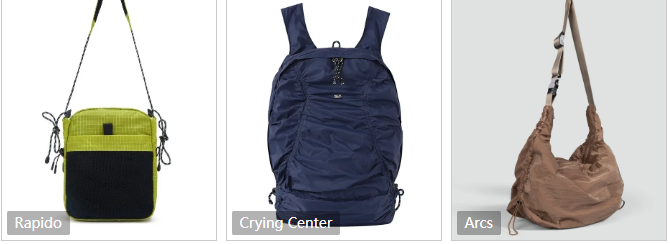
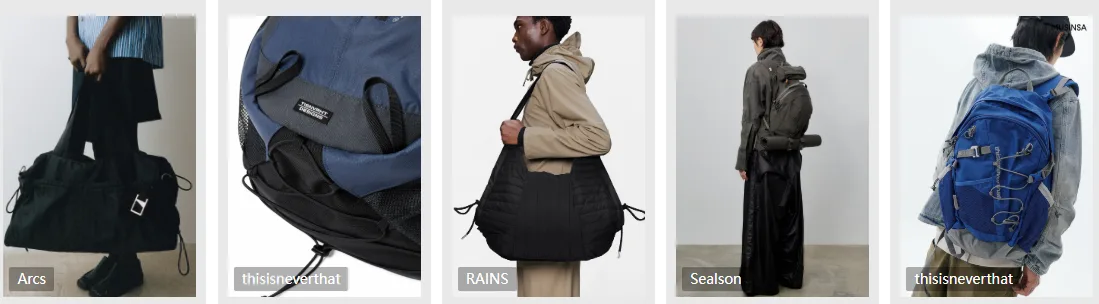
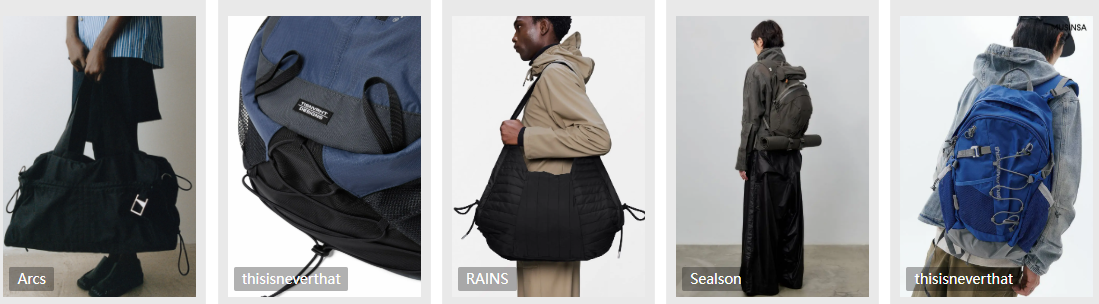
Brands such as RAINS and Arcs adopt dual-side drawstring-through designs, allowing the bag’s capacity to expand or contract dynamically through tightening or loosening the cords. This approach balances practical functionality with aesthetic appeal while creating a naturally gathered texture on the bag surface.
The soft folds formed after tightening the drawstrings introduce a relaxed and effortless feel to the overall design, enhancing the sense of casual sophistication.
In custom bag prototyping, this structure is often applied to improve both volume flexibility and visual texture, enabling more adaptable and design-driven product solutions.
External Bundling
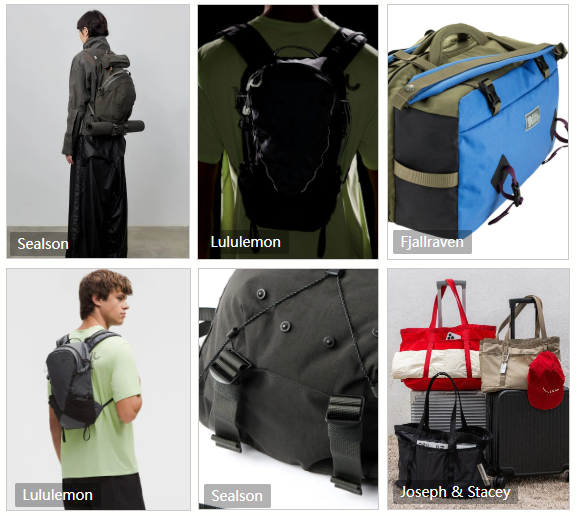
External binding systems are centered on external storage, strap-based fastening, and practical functionality. They reinterpret the binding structures used in professional outdoor gear as auxiliary functional features in bag design.
Through webbing straps, buckles, and elastic cords, these systems allow items such as trekking poles, yoga mats, folding umbrellas, and clothing to be securely attached outside the bag. This effectively expands carrying capacity while preventing internal space from becoming overcrowded, improving overall storage efficiency and usability.
External Bundling — Design Case
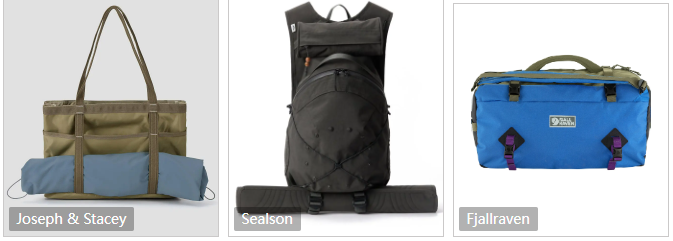
Brands such as Fjällräven and Joseph & Stacey adopt roll-top designs combined with external binding systems, allowing the storage shape to be flexibly adjusted according to the size of the items.
Based on external storage functionality, this approach meets modern users’ core demands for bags—large capacity and quick access—offering a practical solution that balances adaptability and convenience in both outdoor and urban scenarios.
Partial Mesh Pocket
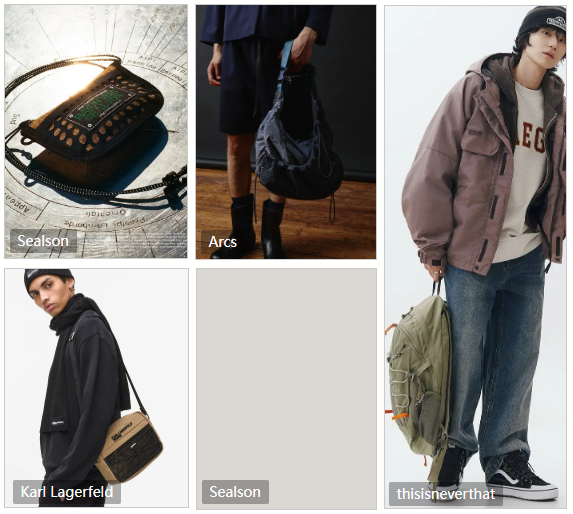
The porous structure of mesh material allows for rapid ventilation and moisture evaporation inside the bag, making it ideal for outdoor activities, travel, and fitness scenarios. The semi-transparent nature of mesh pockets enables quick visibility of stored items while offering a certain level of elasticity.
In addition, mesh fabric is lightweight, and its partial application does not add extra weight to the bag, achieving a balance between practicality and portability.
In custom gear bag manufacturing, mesh details are widely used to enhance breathability and functional convenience without compromising overall product weight.
Partial Mesh Pocket – Design Case
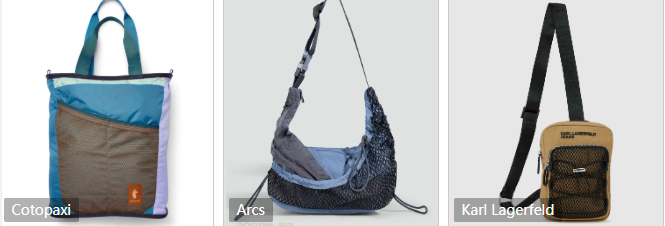
Brands such as thisisneverthat and Cotopaxi use mesh patch pockets combined with vibrant color blocking to enhance an energetic outdoor aesthetic. Meanwhile, Arcs and Barbour incorporate large-scale mesh paneling to convey a relaxed and effortless feel.
In addition, brands like Arcs apply diagonally cut mesh patch pockets that follow the natural movement lines of the body, enhancing visual dynamism and ergonomic appeal.
In custom travel bag solutions, mesh applications are often leveraged to balance functionality, lightweight construction, and strong visual impact across lifestyle and outdoor scenarios.
Conclusion
In conclusion, the evolution of sports and outdoor bag design is increasingly driven by the integration of functional detailing, visual identity, and lifestyle adaptability. From carabiner hooks and webbing loops to drawstring structures, external binding systems, and mesh applications, each element reflects how outdoor DNA is being redefined for urban daily use.
These design directions are not only shaping aesthetic preferences, but also redefining user expectations around versatility, convenience, and emotional value in bag products. For brands and manufacturers, understanding these detail-driven trends is essential to developing collections that resonate with today’s active, style-conscious consumers.
As outdoor and urban lifestyles continue to merge, the future of bag design will be defined by smarter functionality, lighter structures, and stronger visual storytelling—where every detail becomes a bridge between performance and style.
In custom outdoor bag development, these trends provide a clear roadmap for creating products that combine practicality with strong brand differentiation in an increasingly competitive market.