
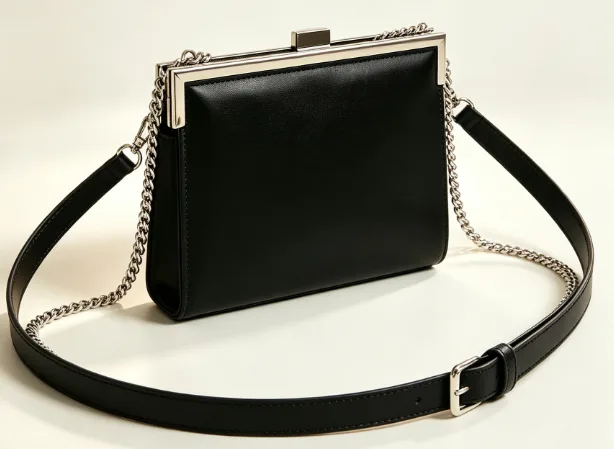
What Makes a Clutch Bag “Premium” — Setting the Standard
Premium isn’t a label. It’s a measurable set of standards. The gap between a high-end piece and a well-packaged ordinary one becomes clear once you know what to test.
Premium comes down to four pillars: material grade, hardware performance, construction tolerances, and verifiable quality testing. Aesthetics matter, but they don’t prove durability. Specs do.
Here’s what each pillar looks like in practice:
-
Material: Full-grain or top-grain leather is the accepted premium baseline. You get strong tactile quality, solid shape retention, and long-term wear.
-
Hardware: Look for solid brass or 304 stainless steel. It should carry 2–3 microns of gold plating and pass a minimum 48–72 hours of salt spray resistance (ASTM B117). Light, hollow-feeling components are a clear warning sign.
-
Construction: Seams need reinforcement at stress points and near hardware. That’s the first place lower-tier manufacturers cut corners.
-
Lining: Microsuede or leather only. Polyester lining at a luxury price point is a red flag — not an acceptable trade-off.
For B2B buyers, here’s the key distinction: premium can be proven. Ask for certifications — ISO 9001 covers manufacturing consistency, OEKO-TEX covers material safety. Also request test data on load performance and plating durability. A supplier who can’t provide this data? Their “premium” claim is aesthetic at best.
The five features in this guide each connect to one of these pillars. Together, they give you a practical checklist — not a subjective impression.
Feature 1: Material Selection — The Foundation of Luxury Clutch Bag Quality
Material choice determines everything that follows. Skilled stitching and polished hardware won’t save a surface that peels at the corners after six months of use.
For high quality clutch bag materials, the industry ranks them clearly: genuine leather sits at the top, followed by high-density or premium PU, then fabric blends. Each tier carries different durability expectations, price anchors, and buyer perception — and those differences are measurable, not a matter of opinion.
Genuine Leather vs. Premium PU: What Buyers Need to Know
Genuine leather — full-grain or top-grain in particular — earns its place as the luxury baseline because of how it performs over time. It holds shape under regular use. It develops a surface patina instead of cracking. It delivers a softness that PU alternatives struggle to match at the same price point. Italian calfskin is the classic benchmark for luxury small goods: fine grain, consistent feel, premium softness. Well-sourced domestic top-grain leather can reach the same standard when tannery controls are tight. So evaluate on grain uniformity, thickness consistency, abrasion resistance, and edge finish — not country of origin.
Premium PU is practical and easier to scale. But it has a real weak point: edge wear. Peeling starts at corners and closure edges first, especially under stress. A supplier offering PU for a custom luxury clutch at a premium price? Ask for a formal abrasion test report that covers those zones.
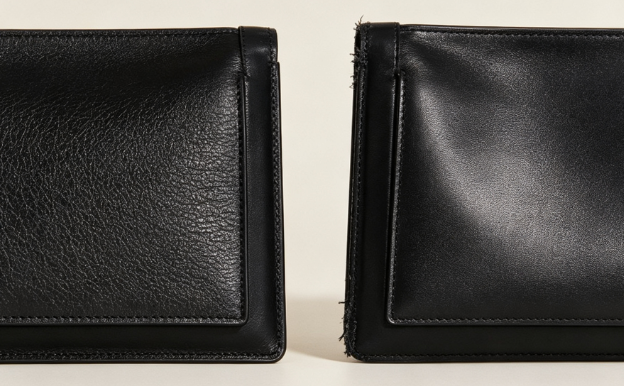
The Procurement Benchmarks That Matter
Don’t stop at material descriptions. Run these hard checkpoints:
-
Closure cycle testing: require a minimum of 3,000 open-close cycles before production approval
-
Abrasion test reports: mandatory for PU; corner and edge performance must be documented
-
Water and scratch resistance claims: require third-party test reports — not just supplier assurances
-
Material datasheets: confirm actual material composition before sampling
The materials that justify a premium price are those that hold shape, resist surface wear, and stay looking good over time. That’s what cuts down on early failure — and what gives buyers the confidence to pay more.
Feature 2: Craftsmanship & Construction — Where Custom Clutch Handbag Quality Is Built
Stitching tells the truth. It’s the one detail that can’t be faked at scale — and it’s the first place factory-grade clutch bags fall apart.
Hand Stitching vs. Machine Stitching: Why It Matters for Clutch Bag Stitching Quality
The structural difference comes down to how each method handles a broken thread. Machine stitching uses a lockstitch — one top thread, one bobbin thread. A single break can cause the entire seam to unravel under tension. Saddle stitch hand-sewing works on a different principle: one thread passes through each hole twice, from opposite sides. This forms an internal knot at every point. So even if one section breaks, the rest of the stitches hold.
For a custom clutch handbag, saddle stitch is the standard at high-stress points: handle roots, main side seams, and closure surrounds. Factory-level suppliers cut corners here most often. That’s also where failures tend to show up within 1–3 years.
Stitch Density (SPI): The Quantifiable Benchmark
Premium clutch bag craftsmanship is measurable. For the main visible panels of a clutch-sized piece, the accepted benchmark is ≥7 SPI (≈2.8 stitches/cm). A supplier claiming luxury construction but delivering 4 SPI with heavy thread is producing factory output — not fine goods.
Practical QC method: measure three separate segments on a sample using a ruler. Record the average SPI. Use this as a direct comparison metric across suppliers.
Edge Finishing: Burnished vs. Raw
A burnished edge needs at least 2–3 rounds of grinding and sealing. Each pass takes up to 30–60 seconds. Run a fingertip across the edge — it should feel smooth with zero resistance. Roughness, flaking, or any visible step variation beyond ±0.2 mm points to an incomplete finishing process.
Raw edges are not acceptable on a premium custom clutch bag. Full stop.
The B2B Verification Checklist
Request a stitch specification sheet from any supplier you’re evaluating. It should confirm:
-
Which stress points use saddle stitch hand-sewing
-
Minimum SPI per zone (visible panels vs. structural seams)
-
Edge sealing process steps and thickness tolerance (±0.15 mm)
-
Glue residue standard — zero visible overflow under direct light
Inspect at least three stress points per sample: handle base, side seam, and clasp perimeter. A supplier who can’t provide written specs is running informal quality control. That means inconsistent output across batches — and inconsistent product reaching your customers.
Feature 3: Customization Depth — What Separates a True Custom Clutch Purse from a Stock Template
The word “custom” gets used loosely. A supplier who lets you pick from three colors and stamp your logo on the front is not the same as one who rebuilds the pattern from scratch. That distinction matters — and it’s measurable.
Real customization depth covers six dimensions: silhouette, hardware, colorway, lining structure, branding technique, and closure system. Stock-template suppliers touch one or two of these. A full custom clutch handbag manufacturer works across all six at once.
Surface Custom vs. Deep Custom: The Real Divide
Most suppliers fall into one of three capability tiers:
-
Level 1 — Surface customization: color swaps, logo placement, basic gift packaging. The pattern stays untouched. MOQ runs 50–100 pcs per color. Sampling takes 7–10 days.
-
Level 2 — Structural customization: dimension adjustments (length, height, base width), hardware swaps, added interior pockets. MOQ rises to 200–300 pcs per colorway. New pattern development adds 10–20 days before bulk production starts.
-
Level 3 — Concept-to-pattern development: original silhouettes, proprietary hardware molds, multi-technique branding, exclusive colorways. MOQ runs 500–1,000 pcs per style. Full development plus bulk lead time runs 45–60 days.
The gap between Level 1 and Level 3 isn’t just about capability — it’s structural. A custom bridal clutch bag with the bride’s photo printed on the shell, a custom frame hardware width, and a contrast-color microsuede lining? That’s Level 3 work. Swapping a black clutch to ivory and adding a metal nameplate? That’s Level 1.
The Six Dimensions — What Deep Customization Really Controls
Silhouette and pattern: A true custom clutch purse starts at the paper pattern stage. Length adjusts in 0.5 cm steps across an 18–28 cm range. Height runs 10–20 cm. Base width runs 0–6 cm to control volume. For frame-mouth clutches, the pattern formula stays consistent: shell width = frame width + ~16.5 cm; lining width = frame width + ~7.5 cm. Stock-template suppliers offer fixed size tiers — small (~18×14 cm), medium (~20–22×15–16 cm), large (~28×22 cm) — with no adjustment in between.
Hardware: Deep customization means you choose the frame type (straight, curved, geometric), closure style (magnetic, turn-lock, push-clasp), and finish color from a full range — gold, rose gold, silver, black nickel. Closure punch positioning goes straight onto the pattern, held within ±1–2 mm of the center line. A dedicated plating bath for a single metal color needs a minimum of 100–200 pcs. Surface-level suppliers pull from existing stock hardware only. Closure position is fixed. Color choice is binary.
Logo and branding technique: A custom logo clutch bag from a Level 3 supplier can combine metal badge, embossed leather patch, hot-stamp foil, screen print, and digital photo print — all in one design. Metal logo badges run 20–40 mm wide and 5–10 mm tall. Embossed or foil monograms need a minimum character height of 4–8 mm, plus at least 5–7 mm clearance from the edge to prevent deformation. Level 1 suppliers place a single-color logo at one fixed position — 10–20 mm below center — and nothing else moves.
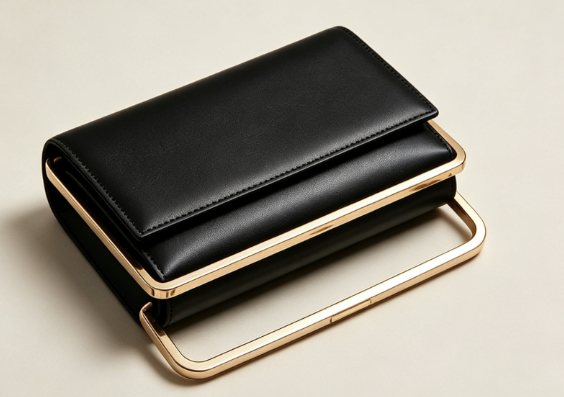
How to Verify a Supplier’s Real Customization Depth
Ask these questions before you commit to sampling:
-
Can you adjust length, height, and base width on their own? What’s the smallest step size?
-
Do you stock multiple frame sizes (e.g., 8 in, 9 in, 10 in)? Will you open new hardware molds, and what’s the MOQ and tooling cost?
-
Can you add interior zip pockets or card slots? Will you provide a full pattern dimension sheet at the sample stage?
-
What branding technique combinations are available? What are the maximum logo dimensions and minimum line width?
A supplier who answers with specific numbers has real process documentation behind them. One who says “yes, no problem” without any specs is running informal production — and that means inconsistent output the moment your order grows.
Feature 4: Functional Design — Practical Intelligence Inside a Luxury Evening Clutch
Evening clutches now hold 32.5% of the luxury clutch market — $2.34 billion in 2025 revenue. At that scale, functional design isn’t a bonus. It’s a competitive axis.
A bag can have perfect stitching and Italian calfskin finish. Your phone still needs to fit. Without that, nothing else matters.
Smartphone Compatibility: The Dimension Check That Gets Skipped
Most buyers skip internal dimensions until after sampling. That’s an expensive mistake.
A typical luxury evening clutch measures 160–210 mm in length, 90–120 mm in height, and 25–40 mm in depth. That’s tight. An iPhone 15 Pro Max is 160.9 × 77.8 mm — it needs a clutch with ≥175–180 mm internal length to fit at all. Target 165–170 mm internal length and you cover 80–85% of users’ primary smartphones in one spec.
For B2B buyers: put internal dimensions at the top of your sample brief. Not at the bottom.
Interior Organization: Enough Structure, Not Too Much
The standard evening load-out — phone, 2–4 cards, lipstick, key — fits well in an internal volume of 0.25–0.4 L. Add too much structure and you lose the slim profile that defines a custom evening clutch.
The practical setup for event-only use:
– 4–6 card slots (each 54 × 86 mm)
– 1 main compartment for phone + slim cosmetics
– 1 flat slip pocket for cash or a ticket
Hybrid day-to-evening models need more: 6–8 card slots, at least one zippered compartment, and interior volume up to 0.4–0.7 L.
Closure System: Security vs. Access Speed
The trade-off is real and measurable:
|
Closure Type |
Access Speed |
Security Level |
Best For |
|---|---|---|---|
|
Magnetic flap |
~1–2 sec |
Moderate |
Formal events, controlled settings |
|
Zipper |
~3–4 sec |
High |
Crowded parties, travel, daily use |
The strongest setup for a custom bridal clutch bag or branded event clutch: magnetic flap as the primary closure for aesthetics and quick access, plus a zippered inner pocket for cash and high-value cards. Both needs covered in one design.
Detachable Straps: The Upgrade That Justifies a Price Premium
Convertible clutches — hand-held, shoulder, crossbody — give brand clients one of the clearest functional upgrade paths available right now.
Add a detachable chain or leather strap — 110–120 cm for crossbody, 90–100 cm for shoulder carry — and you turn an event-only piece into a multi-scenario bag. Market data backs a 10–20% price premium for this setup over non-convertible versions.
For brand-custom programs, a two-tier structure works well:
– Base version: hand-held, 4–6 card slots, magnetic closure, target weight ≤300 g
– Upgrade version: detachable strap, zippered pocket, 6–8 card slots, larger interior
Same silhouette. A clearly different value proposition — plus a built-in upsell path from day one.
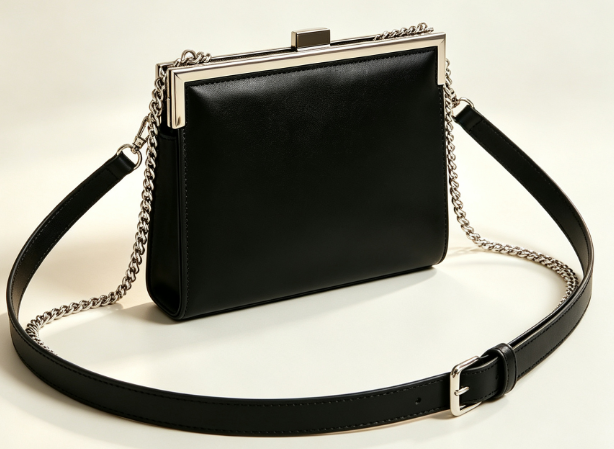
Feature 5: Hardware, Finishing & Exclusivity — The Details That Define Designer Clutch Bag Standards
Hardware is where luxury becomes measurable — not subjective.
Pick up two clutch bags that look identical on a shelf. The premium one feels heavier before you’ve checked a single detail. That weight difference isn’t random. It comes from material choices: solid brass versus zinc alloy, thick plating versus thin, PVD-treated surfaces versus standard electroplating.
The Material Hierarchy — What’s Inside Your Hardware
Zinc alloy covers 80–90% of fashion bag hardware worldwide. It dominates because it’s cheap and easy to cast. For a custom clutch handbag, though, it’s rarely the right choice.
Solid brass is the luxury baseline. It runs 15% heavier than zinc alloy. It resists fracture under load and builds a natural patina over time instead of flaking. For high-friction or high-humidity use, 304/316L stainless steel delivers even stronger corrosion resistance.
Surface treatment matters just as much as base material:
-
Gold plating: minimum 2–3 microns for a luxury-grade finish. You need a nickel underlayer of ≥0.5 μm and a gold/gun-color top layer of ≥0.25 μm. Drop below these numbers and the plating wears through under normal friction.
-
PVD coating: the top standard for luxury bag hardware. It reaches HV 2000–4000 hardness and gives you 5–10 years of usable life.
-
Salt spray resistance: external hardware must pass 48–72 hours under ASTM B117 with zero visible corrosion.
Structural Performance — The Numbers That Verify Quality
Good looks alone don’t qualify hardware for a designer clutch bag. Mechanical performance does.
Here are the key benchmarks for critical components:
-
D-rings, buckles, shoulder attachments: minimum 50 kg static load held for 60 seconds, deformation <1 mm
-
Turn-lock closures: minimum 2,000 open-close cycles with no surface degradation or structural loosening
-
Finish friction test: 60 seconds of light pressure rubbing on contact zones — zero color transfer, zero delamination
Finishing Details — Where Exclusivity Becomes Visible
Engraving on a custom logo clutch bag should read sharp, centered, and clean-edged under direct light. Soft edges, misalignment, or uneven depth all point to low tooling precision. These are easy to spot and hard to excuse at the luxury tier.
Three finishing details separate premium production from standard output:
-
Burnished edges: multiple grinding and sealing passes — not raw cuts or glue-sealed edges
-
Embossed or textured panels: linked to proprietary molds, used in limited-run designs to build pattern-level exclusivity
-
Limited numbering: serial plates or stamped edition marks signal scarcity and collectability. For brand clients, this is one of the most direct ways to push perceived value.
B2B buyers reviewing a custom evening clutch program should request one extra environmental test for high-end series: 40°C / 80% RH / 72-hour exposure. This screens for bubbling and corrosion before bulk production locks in.
The clutch bags that hold their value — and their finish — use hardware that proves its quality with data, not just looks.
Premium Custom Clutch Bag vs Standard Clutch Bag — Side-by-Side Comparison
The price gap between a $45 FOB clutch and a $120 FOB clutch isn’t markup. It comes down to material thickness, stitch count, and hardware that holds up to a magnet test.
Here’s how the two tiers compare across every dimension that matters at the production level:
|
Dimension |
Premium Custom Clutch |
Standard Clutch |
|---|---|---|
|
Leather thickness |
1.6–2.0 mm, full or top grain |
0.8–1.2 mm PU or split leather |
|
Stitch density |
8–10 SPI, saddle stitch at stress points |
4–6 SPI, machine-only |
|
Edge finishing |
Multi-pass burnishing + sealed edges |
Single-coat edge paint or raw cut |
|
Lining |
Cotton twill, silk, or high-density satin; seam allowance ≥ 3/8″ with binding |
Polyester or non-woven; narrow unsealed seams |
|
Hardware base |
Solid brass or 304 stainless steel; non-magnetic |
Zinc alloy; magnetic, lightweight, prone to flaking |
|
Hardware durability |
Passes 5,000+ open-close cycles |
No durability data provided |
|
Lifespan |
10–15 years with normal care |
1–3 years before peeling or deformation |
What the Price Data Says
The European and North American market has a clear “value sweet spot” for premium clutches: $800–$1,000 retail. At this tier, both materials and construction quality hold up. Drop below $500, and hardware, lining, and edge finishing start to fall apart. That’s not opinion — it’s a consistent pattern across the industry.
At the top end: Hermès and Bottega evening clutches retail at $4,300–$6,400. High-demand colorways trade at $22,000–$28,000 on the secondary market. Exotic skin variants go beyond $60,000.
Standard PU clutches sit at $20–$80 retail. Buyers at that tier repurchase based on style rotation — not because the bag lasts.
The B2B Shortcut: Four Fast Supplier Checks
Skip the catalog. Run these four checks on samples before you commit:
-
Magnet test: Solid brass hardware won’t stick to a magnet. Most components attract? It’s zinc alloy.
-
Stitch count: Measure at the bag mouth and bottom corners. Below 6 SPI on a claimed premium piece is a clear fail.
-
Seam allowance: Fold back the lining. A bound seam allowance ≥ 3/8″ with cotton or silk lining shows real construction discipline.
-
FOB cost logic: A genuine full-grain leather clutch priced below $20/pc FOB means something got cut — material, labor, or both. Good suppliers break it down: materials at 30–40%, labor at 20–30%, hardware at 10–15%.
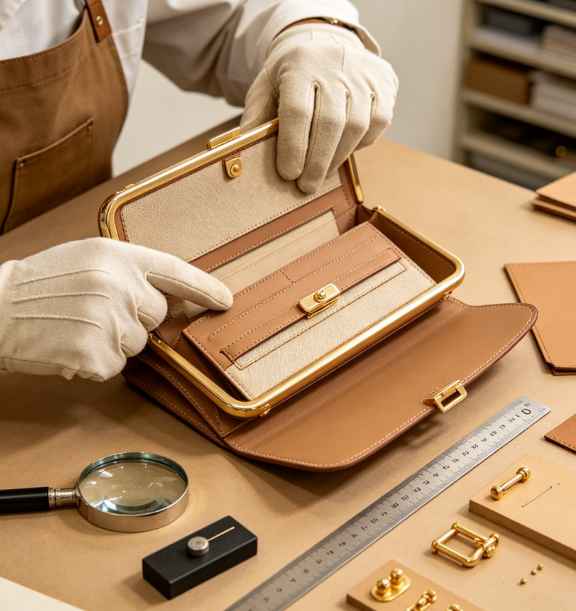
A supplier who sounds sure of their quote but can’t break down their cost structure is hiding margin compression somewhere. You just can’t see it yet.
Buyer Verification Checklist — What to Confirm Before Ordering a Custom Clutch Bag
A supplier’s catalog looks convincing. Their samples arrive on time. Then bulk production ships — and nothing matches.
That gap between sample and bulk is where most sourcing mistakes happen. To close it, lock down four verification blocks before any deposit clears: sample approval, material and spec confirmation, craftsmanship QC criteria, and delivery terms.
Four Blocks to Confirm Before You Place the Order
1. Sample Approval
Request a physical sample before bulk production starts. Once you approve it, that sample becomes the reference point for every production inspection that follows.
Before paying a deposit, ask for a 10–20 minute live factory video — not a pre-recorded tour. You want to see the sample room, production line, QC area, and warehouse in real time. Live only. No edited clips.
2. Material Specification Sheet
Pin down material, weight, lining, hardware, and construction details before sampling begins. For each material, request a datasheet or third-party test report. Confirm it applies to the exact product you’re ordering — not a generic category.
Every valid compliance document needs to include: company name, product category, testing date, issuing organization, report number, and validity period. Selling into the EU or California market? Ask for REACH and Prop 65 compliance reports by name.
3. Craftsmanship and QC Acceptance Criteria
Check materials, hardware, stitching, logo, labels, and packaging against the approved sample and spec sheet. Don’t accept the supplier’s internal standard as the baseline — your approved sample is.
Ask the supplier to walk you through their five-stage inspection process: incoming materials, in-process production, finished goods, packaging, and pre-shipment. Then request photo evidence from each area: cutting room, sewing floor, material storage, QC table, and warehouse. Document every deviation with photos and notes. Make a clear rework / reject / accept decision before the shipment moves.
4. Delivery and Commercial Terms
Three things get missed on almost every first order:
-
Whether lead time starts from deposit or from sample approval — these can differ by 2–3 weeks
-
Whether packaging is included in the quoted price
-
Whether final shipment is conditional on buyer inspection approval
Get all three confirmed in writing before the PO goes out.
Supplier Red Flags Worth Knowing
Some warning signs are subtle. Others aren’t.
Walk away if a supplier refuses to share their factory address, declines a live video call, or can’t show a sample room on camera. Any certificate missing a date, report number, or product match? Treat it as invalid — not “close enough.”
A supplier who can’t state where lead time starts, how defects get handled, or what’s included in the packaging quote is a problem. That vagueness will cost you money before the order is done.
SPIN Questions That Surface the Real Picture
Use these four questions in your first supplier conversation:
-
Situation: “What materials, lining, hardware, and construction options do you produce — and what’s the MOQ for each?”
-
Problem: “Which step causes the most defects or delays: material sourcing, stitching, logo application, or packaging?”
-
Implication: “The sample approval is delayed or material specs change after deposit — how does that affect lead time and pricing?”
-
Need-payoff: “Can you provide a sample confirmation sheet, QC checklist, and test reports so we can approve production faster and cut down on rework?”
A supplier with real process documentation answers with specific numbers. One running informal production answers with reassurances. That difference tells you everything — before sampling costs you time and money.